Lifery: an exhibition-situation
Lifery is a unique place on the map of the country, where art is meant to serve as a respite. The twelve-month exhibition-situation which inaugurates the venue is conceived as a living organism that follows its own internal rhythms of regeneration and decay, aligned with the cycles of nature. The winter round of the year-long Lifery events showcases more than 20 artists, who have been invited to join the collaborative effort by Katarzyna Roj, program director of the BWA Wrocław Galleries of Contemporary Art, and the person behind the foundational concept of the venue.
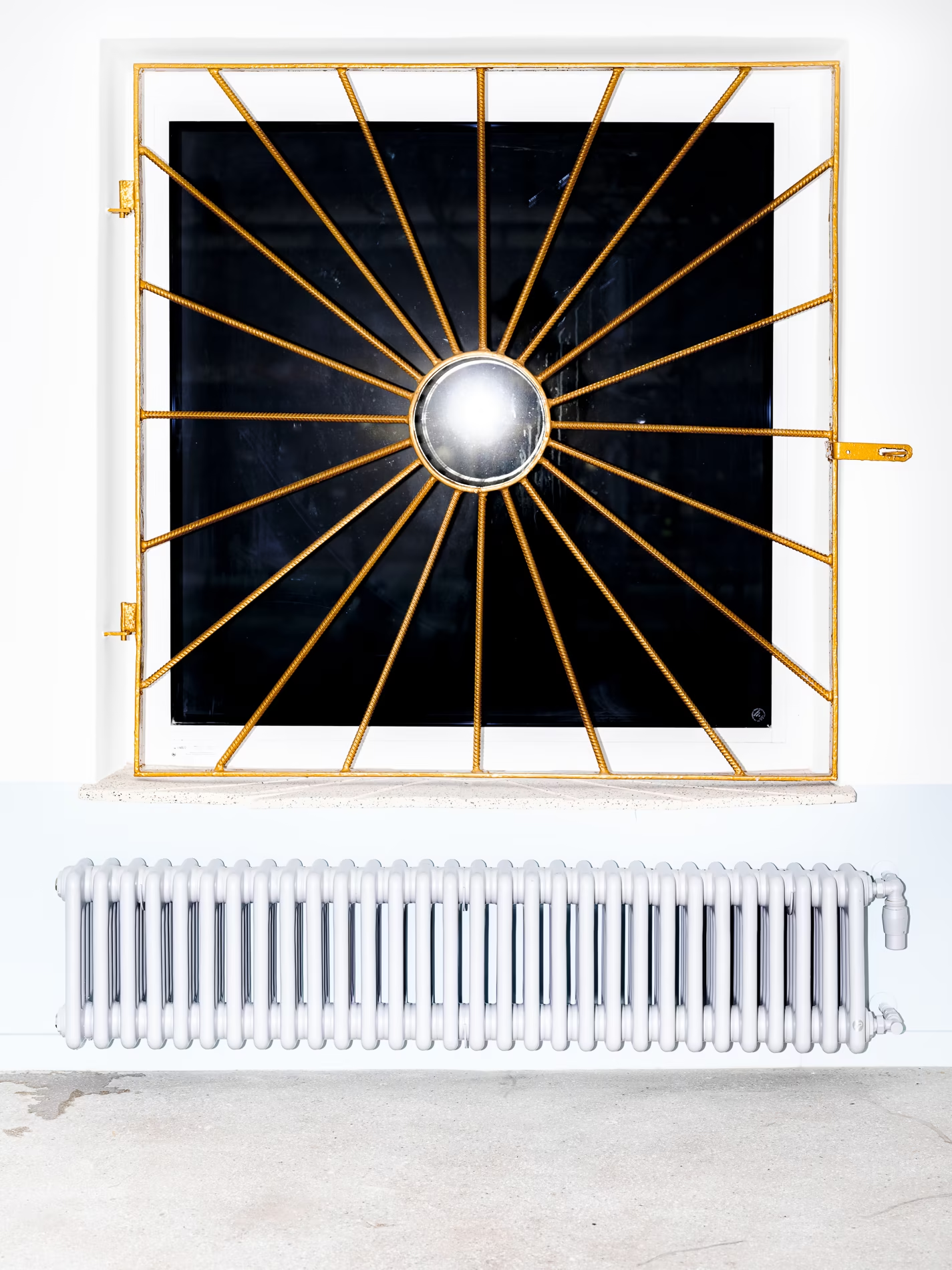
Lifery—conceived as an urban sanatorium—was launched within the Dizajn gallery in 2019 on the initiative of Katarzyna Roj and designed by the BUCK.Studio. It was inspired by the health-resort and spa house traditions of Poland’s Lower Silesia. Following the overhaul, Liferywill fill the entire gallery. In addition to leisure and art viewing in a relaxed atmosphere, it will offer a breadth of first-hand art experiences intended to stir the visitors’ imagination and enliven their senses. The Polish word żyjnia,of which “lifery” is an English backtranslation and which has both retro and futuristic connotations, emerged in the 1960s as a Polish translation of the English “living room.” As Katarzyna Roj, the proponent of the idea, a curator, and the program director of the BWA Wrocław Galleries of Contemporary Art says, “Lifery is a concept of art gallery turned into a place of everyday living, being, rather than merely an exhibition venue. The Wrocław-based artist Jerzy Rosołowicz said that art is one of the few areas of life where people do not need to be consumers, but where they can be creative instead, also as an audience. Bearing this in mind, we seek to create a place that forms a playground for the imagination, one that encourages people to interact freely with the world as it is presented here.”
A Prehistoric Ocean in Art Gallery
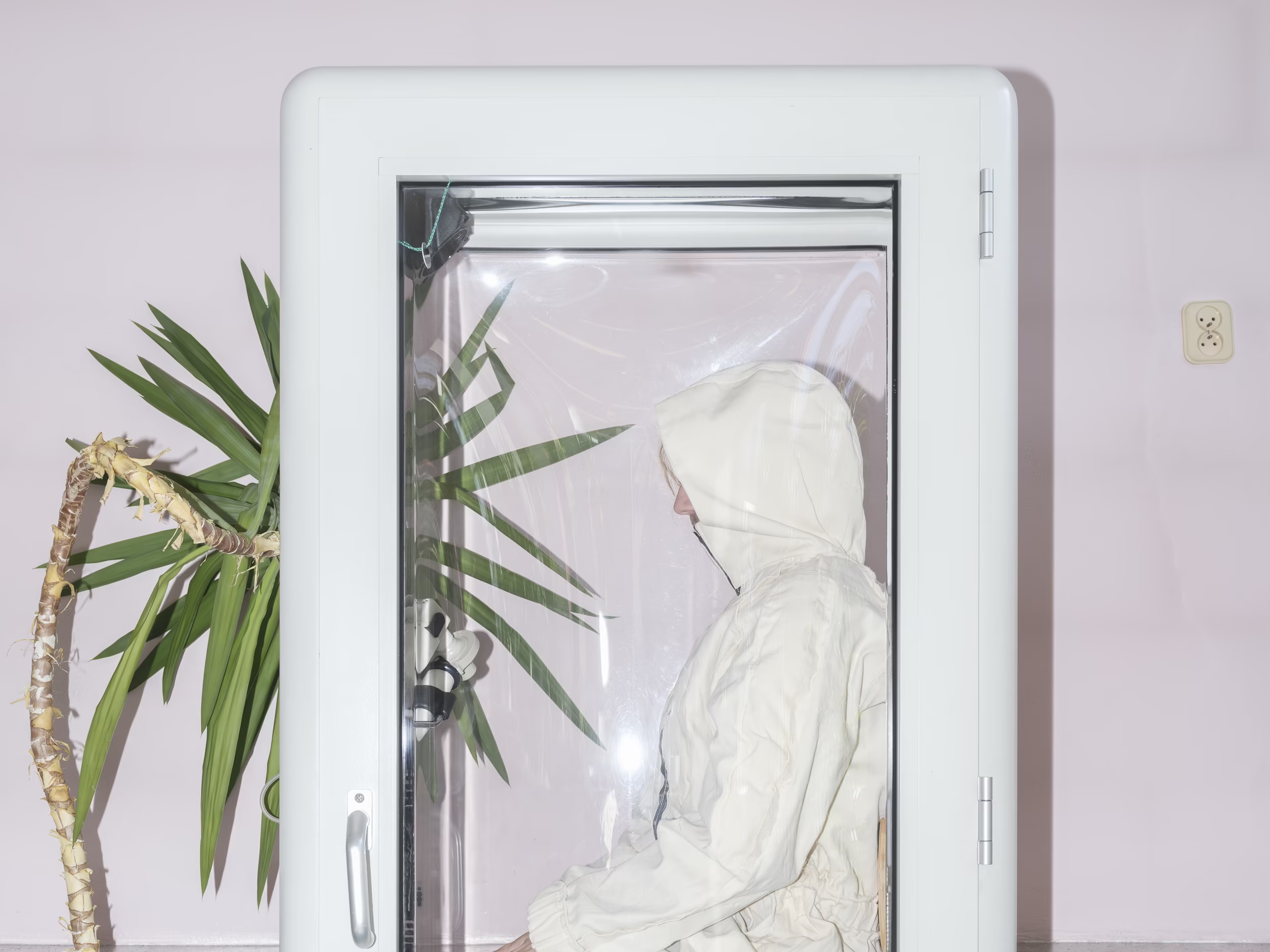
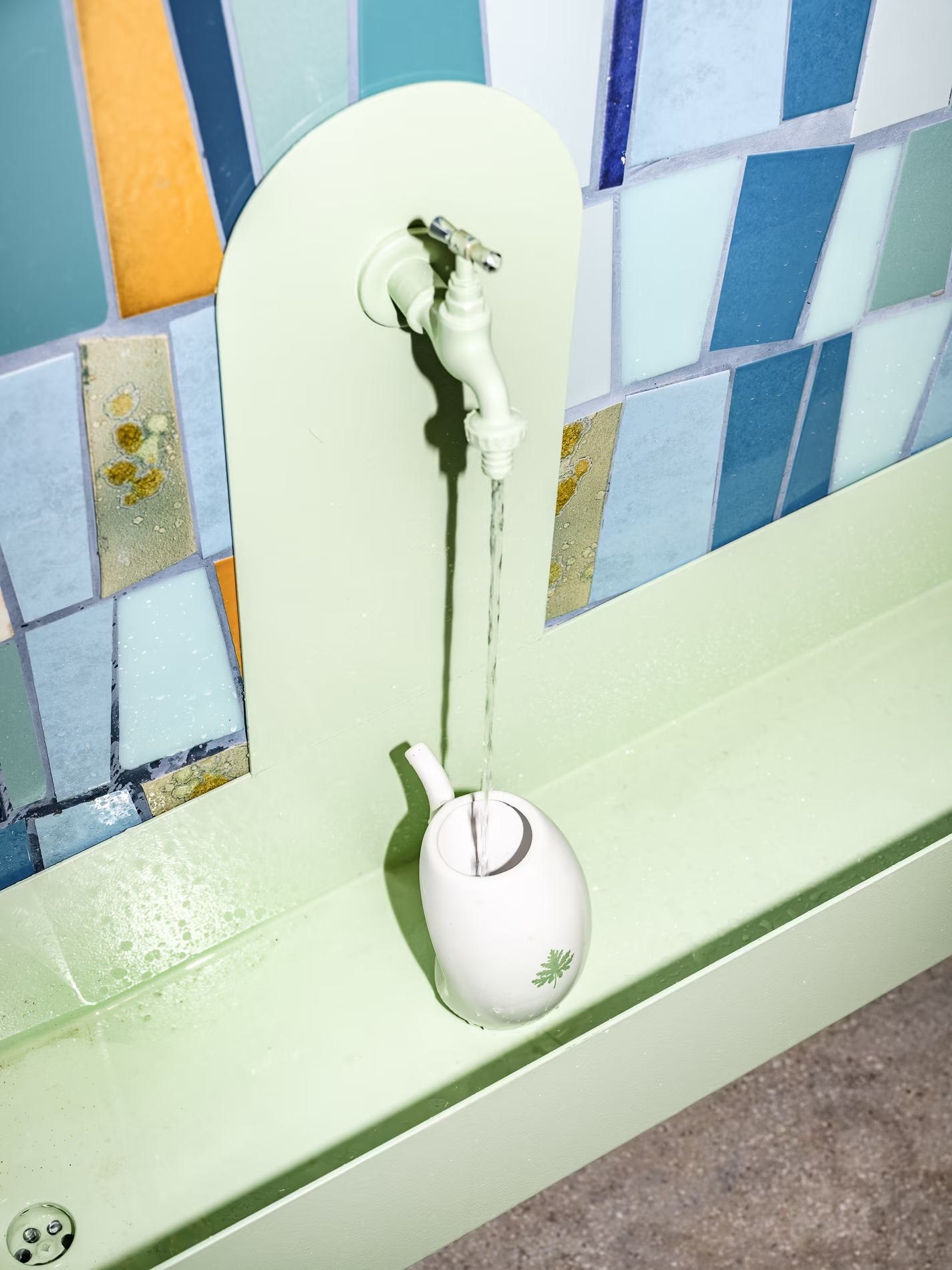
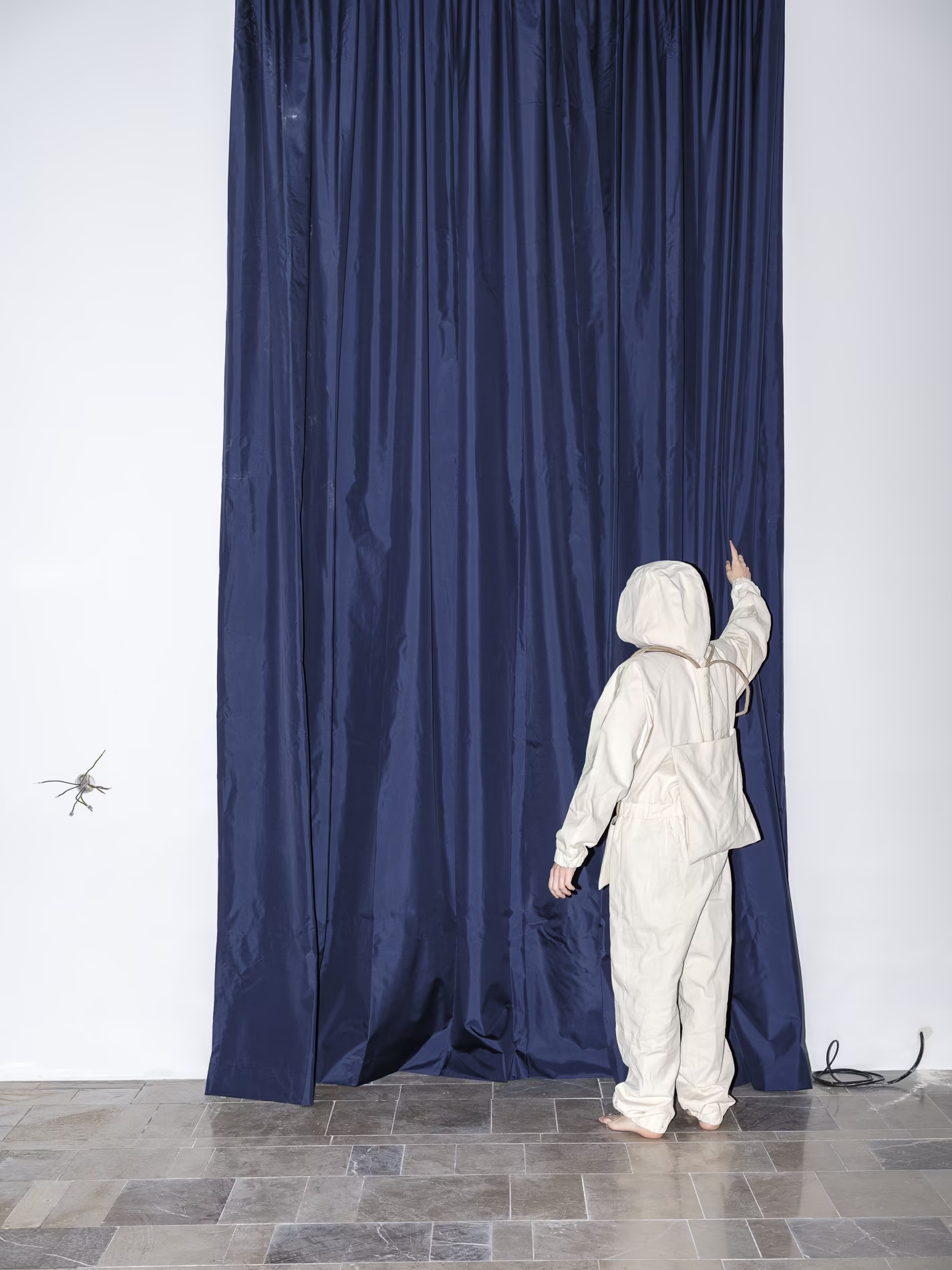
Being an exhibition and situation in one, Lifery resembles a living organism that follows its own, internal rhythms of regeneration and decay, aligned with the natural seasons. Over the course of the next twelve months it will evolve in the hands of a slate of artists and curators. Katarzyna Roj has inaugurated the winter season. Karol Pałka will announce the spring, Bogna Świątkowska—the summer, and Magdalena Kreis—the autumn. The winter show includes, among other works and practices, installations by kinoMANUAL (Aga Jarząb and Maciek Bączyk) with the participation of Paweł Bąkowski, and by CENTRALA (Małgorzata Kuciewicz and Simone De Iacobis), objects by Krzysztof Gil and Marcin Janusz, Magdalena Maros, Bartosz Mucha, Marta Niedbał and Paweł Olszczyński, a commemorative plaque by Hubert Czerepok, a composition by Daniel Brożek, Kama Sokolnicka and Joanna Kobyłt, works by Olaf Brzeski, Jarosław Słomski, Tomasz Hartman and Michał Czekajło, photographs by Tytus Szabelski-Różniak, a radio program by Agnieszka Obszańska, a visual essay by Zuzanna Skurka, and an account about the place based on Iwona Kałuża’s research. Some of them are already on display, while others will join in successively over the following months. Some will stay in the gallery permanently in order to reveal its potential over time, while others will create symbolic portals leading to imaginative journeys to various places: landscapes or health resorts. As Katarzyna Roj explains, “we are creating a ‘score’ for situations, rather than a traditional show, which will involve a shift of focus from the artworks themselves to how they are responded to, how the body moves within the space, how visitors experience their own presence, and what comes out of the interaction between the audience and the exhibits and other people.”
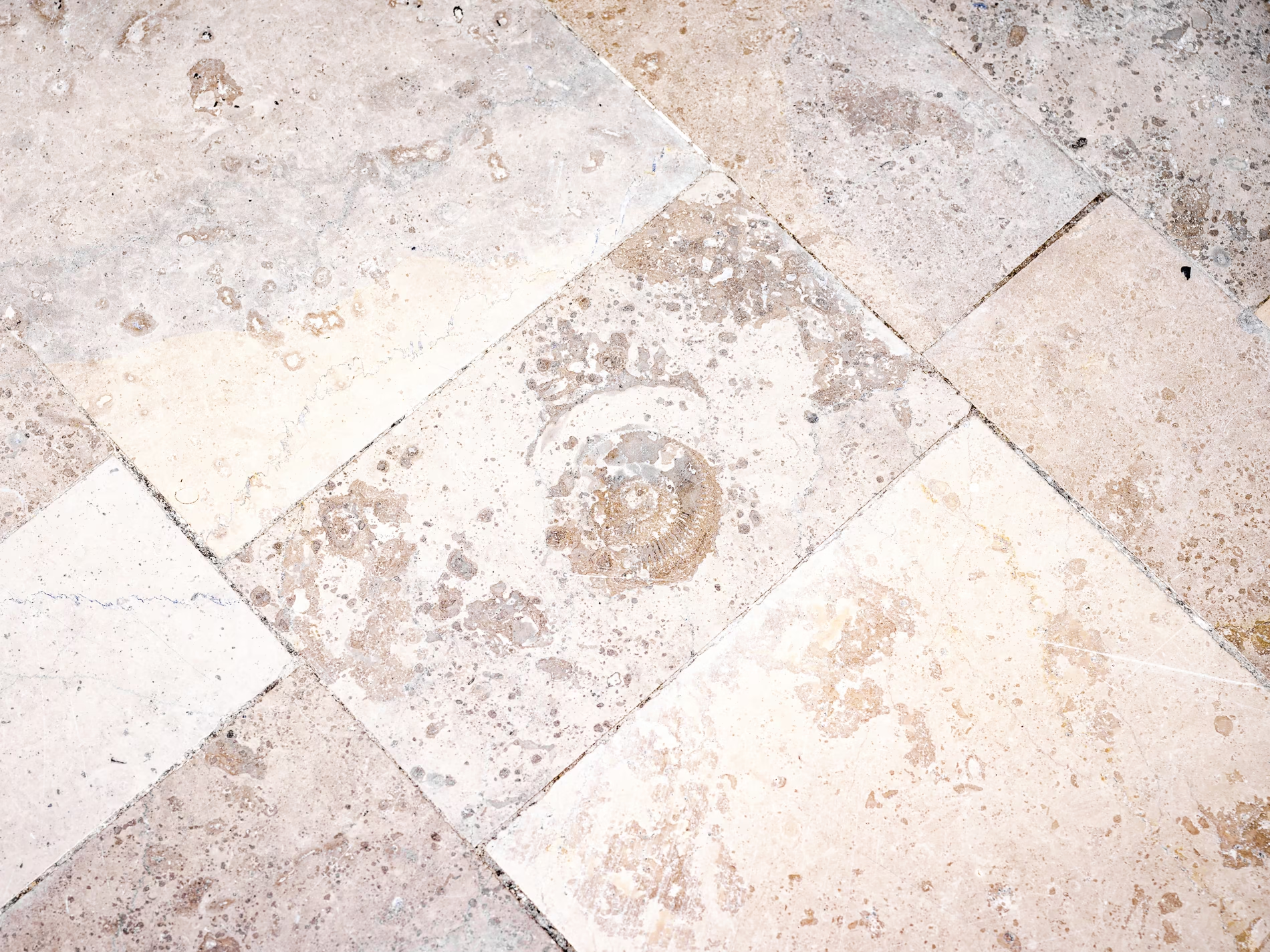
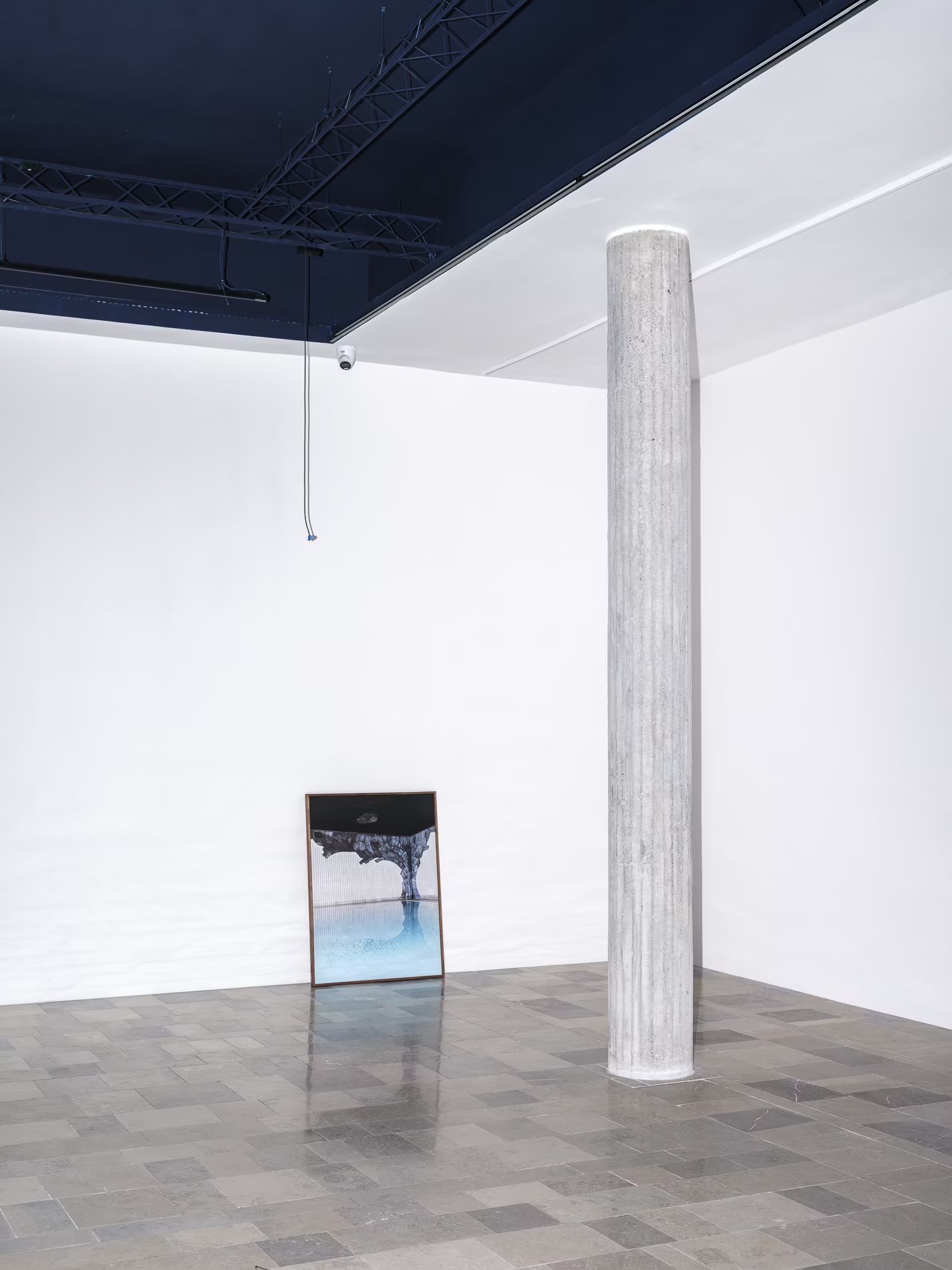
Throughout, Lifery coils and uncoils as a story, with successive chapters spiraling together like the shell of an ammonite—fossils of which embedded in the floor have been discovered during the renovation process by Zuzanna Skurka, a materials researcher invited to collaborate. As Katarzyna Roj explains, “Ever since we have looked upon the floor not only as a foundation for our feet, but as a nautical chart of an ancient ocean. And the ammonite has become a symbol of this new era in the gallery’s history.”
Portal to the New Main Bulding of BWA Wrocław
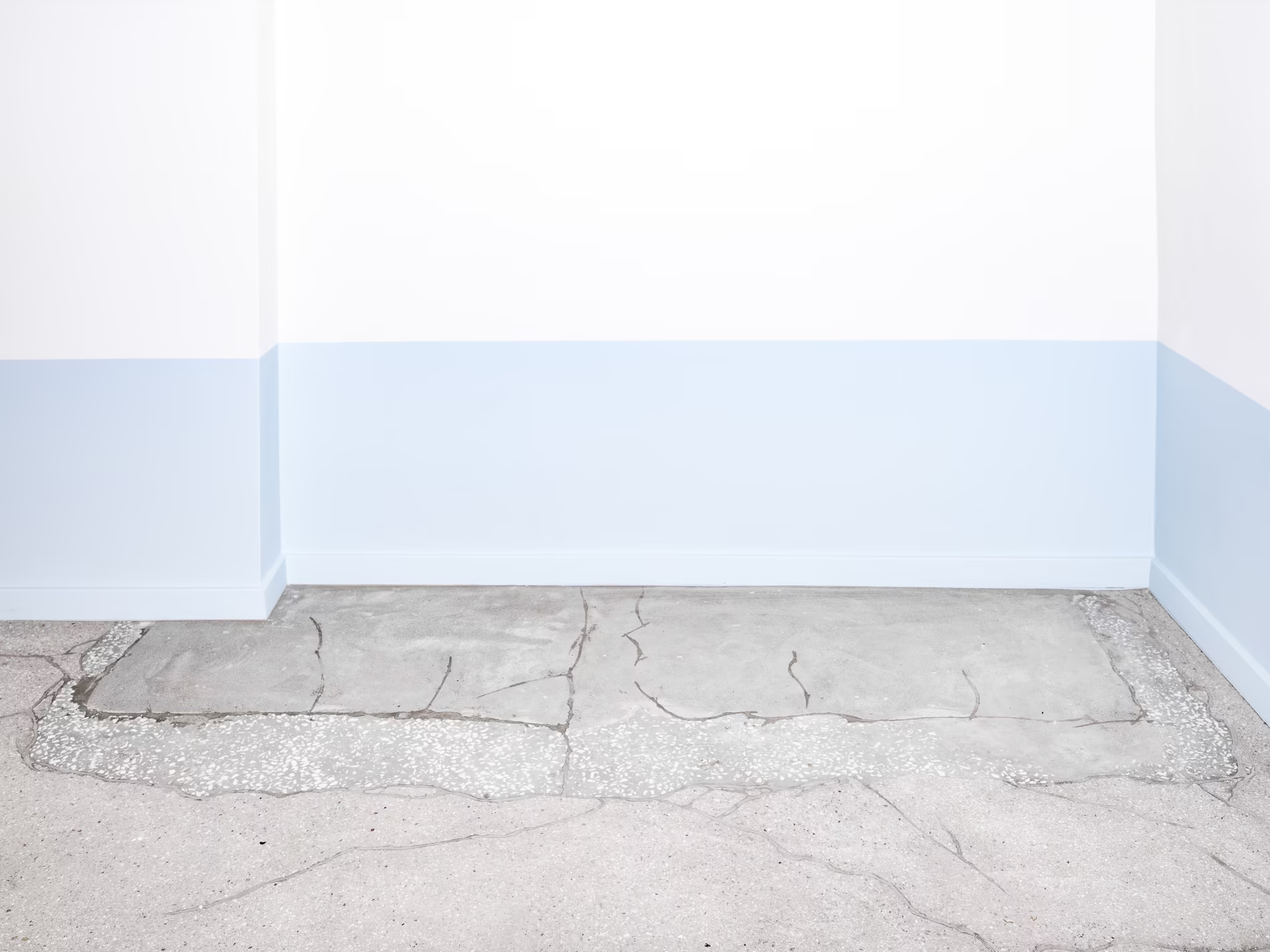
The gallery re-opened after a two-year overhaul co-funded by the Municipality of Wrocław and the Ministry of Culture and National Heritage. This is the first such comprehensive revamp since the building was erected in 1956. The new functional layout has been created by Marta Mnich of the Architecture Unit Foundation together with Małgorzata Kuciewicz and Simone De Iacobis of CENTRALA, in consultation with the BWA Wrocław team and surveyed gallery visitors. The refurbished gallery meets modern exhibition standards while providing inclusive accessibility for visitors with disabilities. The exhibition and workshop spaces have been expanded, and a screening room (“Ciemnica”) and a guest room added. A grey water treatment and recycling system has been installed, too. Arguably, visitors will appreciate other new developments. These include a passageway that will improve access along the axis of Świdnicka and Szewska streets, the historic display window on the south side of the building, which has been partially exposed, and the Żyjnia (Lifery) sign above the entrance, designed by Marian Misiak in collaboration with Natalia Kubacka.

As revamped, the gallery in Świdnicka Street additionally functions as a symbolic portal to BWA Wrocław’s new main building, slated to open in 2028, preluding the future space and signaling the direction of the institution’s development. As Maciej Bujko, Director of the BWA Wrocław Galleries of Contemporary Art, says, “Lifery heralds our institution’s metamorphosis. It is the vanguard of one of the most prominent contemporary art centers in Poland and the region, which is scheduled to open in 2028.”
Opening of Lifery. Program, Registration:
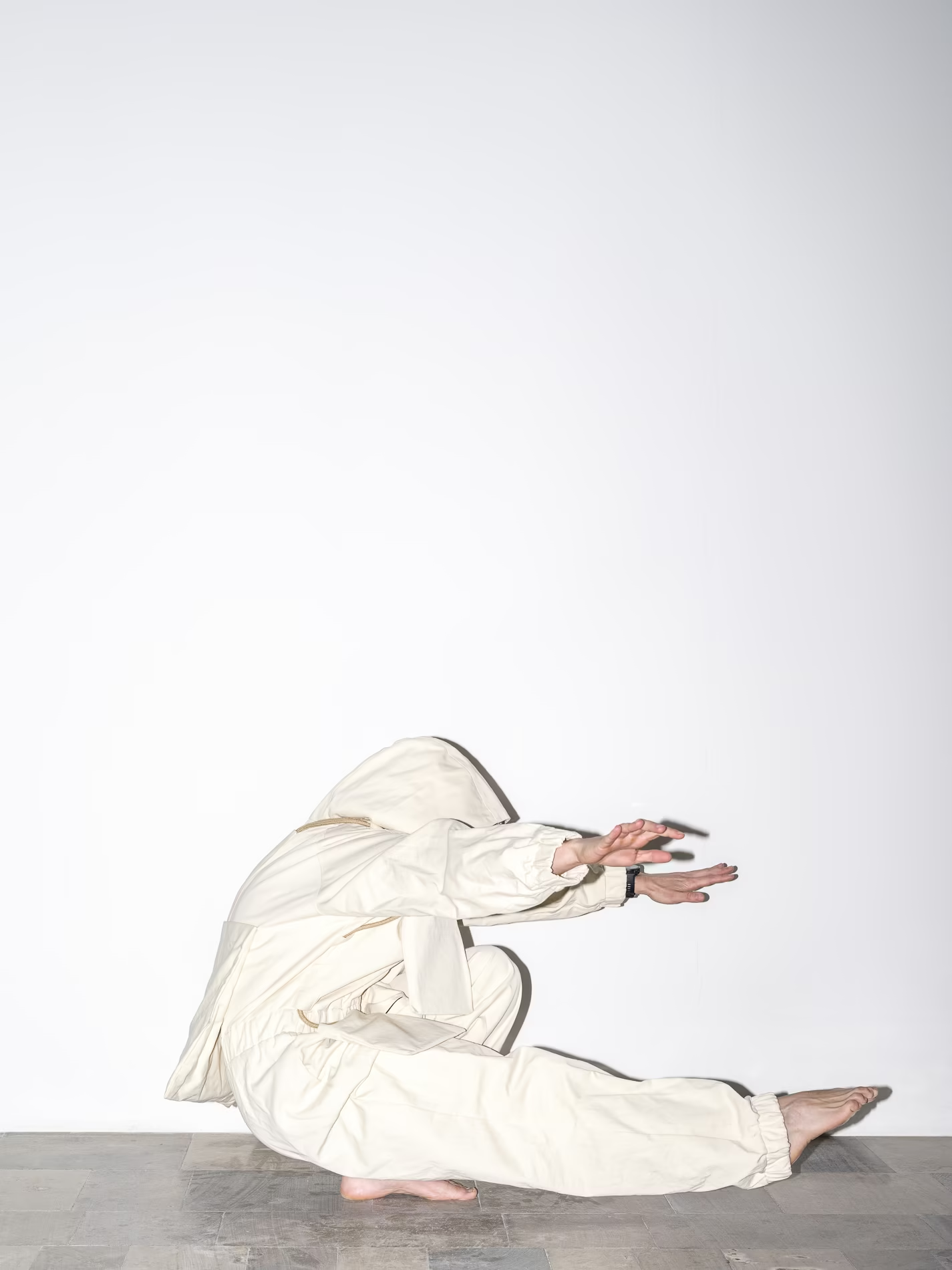
Guests to the opening are invited to join artistic scores prepared by Alicja Wysocka and the BWA Wrocław team. By engaging their senses and body, they will allow visitors to fully explore and experience this unique place. On Friday, January 23, visitors are welcome, on the hour, at 4, 5, 6, 7, and 8 p.m., upon prior registration. The registration can be made from January 8 via the online form available at zapisy.bwa.wroc.pl/zyjnia/, by phone at +48 539 218 444 between 9:00 a.m. and 4:00 p.m., and in each of the BWA Wrocław galleries during their opening hours. Each visit will include a sound session by the Ukojenie collective of Małgorzata Wrzosek and Zuzanna Kofta, and refreshments provided by Food Think Tank. On the weekend of January 24 and 25, the gallery will be open from 11 a.m. to 6 p.m., admission is free, no registration required. On Saturday, January 24, at 5:00 p.m., curator Katarzyna Roj will lead a special guided tour with the artists.
The afterparty will begin at 9 p.m. in the former ZETO building (ul. Ofiar Oświęcimskich 7) with a special show by the Nihilists’ Church ‘Laetoli’ and a sound situation by Gregor Różański. This event is co-organised with Mint Magazine, and in partnership with Vanishing Club. Admission with a wristband from the Lifery opening.
Please note! The wristband does not entitle you to enter the Vanishing Club event, which will take place in another part of the building.
- Gallery concept and curator for the winter program of Lifery: Katarzyna Roj
- Winter program artists: Maciek Bączyk (kinoMANUAL), Daniel Brożek, Olaf Brzeski, Michał Czekajło (FOOD THINK TANK), Hubert Czerepok, Krzysztof Gil, Tomasz Hartman (FOOD THINK TANK), Simone De Iacobis (CENTRALA), Marcin Janusz, Aga Jarząb (kinoMANUAL), Zuzanna Kofta (UKOJENIE), Małgorzata Kuciewicz (CENTRALA), Magdalena Maros, Bartosz Mucha, Marta Niedbał, Agnieszka Obszańska, Paweł Olszczyński, Filip Rybkowski, Zuzanna Skurka, Jarosław Słomski, Kama Sokolnicka, Tytus Szabelski-Różniak, Anna Sztwiertnia, Ilona Witkowska, Małgorzata Wrzosek (UKOJENIE), Alicja Wysocka
- Artistic cooperation: Paweł Bąkowski, Iwona Kałuża, Joanna Kobyłt
- Visual identification and communication: Marian Misiak in collaboration with Natalia Kubacka
- Opening weekend coordination: Małgorzata Sobolewska
- Exhibition production: Monika Muszyńska, Joanna Sokalska
- Assembly: Daria Chraścina, Jakub Jakubowicz, Tomasz Koczoń, Daniel Mroczyński
- Promotion: Joanna Glinkowska, Berenika Nikodemska, Żaneta Wańczyk we współpracy z Magdą Kotowską (FEST PROMO)
- Exhibition editorial team: Joanna Osiewicz-Lorenzutti (oversight), Małgorzata Poździk (PL editing), Patrycja Pączek (PL proofreading), Stefan Lorenzutti (EN translations), Andrij Saweneć (UA translations)
- Accessibility coordination: Magdalena Weber
- Partners: Akademia Sztuk Pięknych im. Eugeniusza Gepperta we Wrocławiu, Koleje Dolnośląskie S.A.
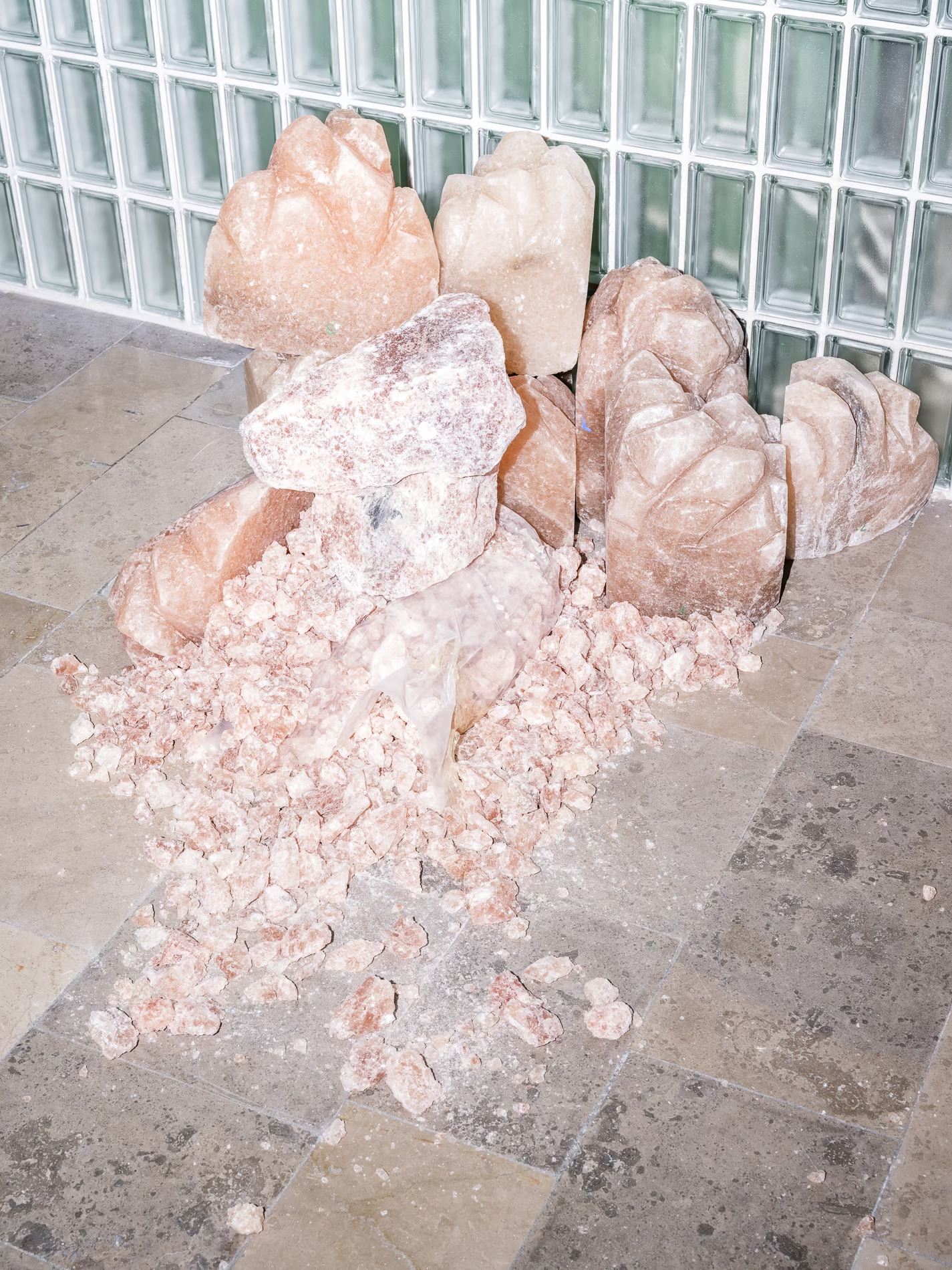
- Cooperation: Tylko, Paged, Zakwas Studio, Kopalnia Soli “KŁODAWA” S.A., Epson, CUDO Kombucha
- Media patrons: Radio RAM, Radio Wrocław, Radio Wrocław Kultura, TVP3 Wrocław, TVP Info, TVP Kultura, Pismo Artystyczne Format, Notes Na 6 Tygodni, Magazyn Szum, Miej Miejsce, Magazyn Mint
- Director and head of the redevelopment project: Maciej Bujko
- Redevelopment administration and coordination: Magdalena Sierżęga-Dybek, Zuzanna Małas
- Redevelopment designers: Marta Mnich (JEDNOSTKA ARCHITEKTURY) oraz Simone De Iacobis and Małgorzata Kuciewicz (CENTRALA)
- Office interiors and workshop room: Joanna Fabjańska (LUVA ARCHITECTURE)
- Ceramic components: Pracownia Projektowania Ceramiki w Architekturze, Katedra Ceramiki, Wydział Ceramiki i Szkła, ASP im. E. Gepperta we Wrocławiu, coordination and supervision: dr hab. Gabriel Palowski, prof. ASP, arch. Daria Kieżun, student team: Wiktoria Mazurczyk, Igor Piątek, Dominik Pieckowski, Xymena Smreczak, Beata Izabela Zając, Hanna Ziarkowska
- General contractor: BARSZCZYK BUDOWNICTWO Sp. z o.o.
- Organiser: Municipality of Wrocław
BWA Wrocław would like to express its sincere thanks to Aleksandra Kabala, Julia Marzec and Julia Wielgos – winners of the third edition of the ‘Concepts’ competition – for participating in discussions and conceptual meetings preparing the promotion strategy for the opening of Lifery BWA Wrocław. The competition was organised in 2025 by the ‘Common’ student club, which operates at the Institute of Journalism and Social Communication of the University of Wrocław.
The exhibition was held under the honorary patronage of the Mayor of Wrocław.
Co-financed by the Minister for Culture and National Heritage from the Cultural Promotion Fund—state special purpose fund.