Gothic Fever
Gothic Fever is an exhibition drawn to the darkness pooling between the glare of two suns. One blazes over Latin America; the other will scorch Wrocław. As part of the Art Scene program of the 26th TAURON New Horizons International Film Festival, we will expand the geography of gothic sensibility. Its tropical inflections will refract like rays through the works of Polish artists, revealing both differences and affinities. Gothic Fever will infect all, injecting the desire to live on one’s own terms.
The starting point for this exploration is the New Horizons festival program dedicated to the tradition of Latin American Tropical Gothic and its contemporary reactivation. Initially a literary current that later bled into cinematic practice, Tropical Gothic combines genre cinema, countercultural energy, and regional folklore with social critique. Gothic as cultural costume was transposed onto the terrain of colonial aesthetics and postcolonial histories. Initiated in the 1980s by the Cali Group in Colombia, the movement spread to neighboring countries over the following decades, becoming one of the most important tools for claiming Latin identities, mapping postcolonial heritage, and navigating intercultural collisions and connections.
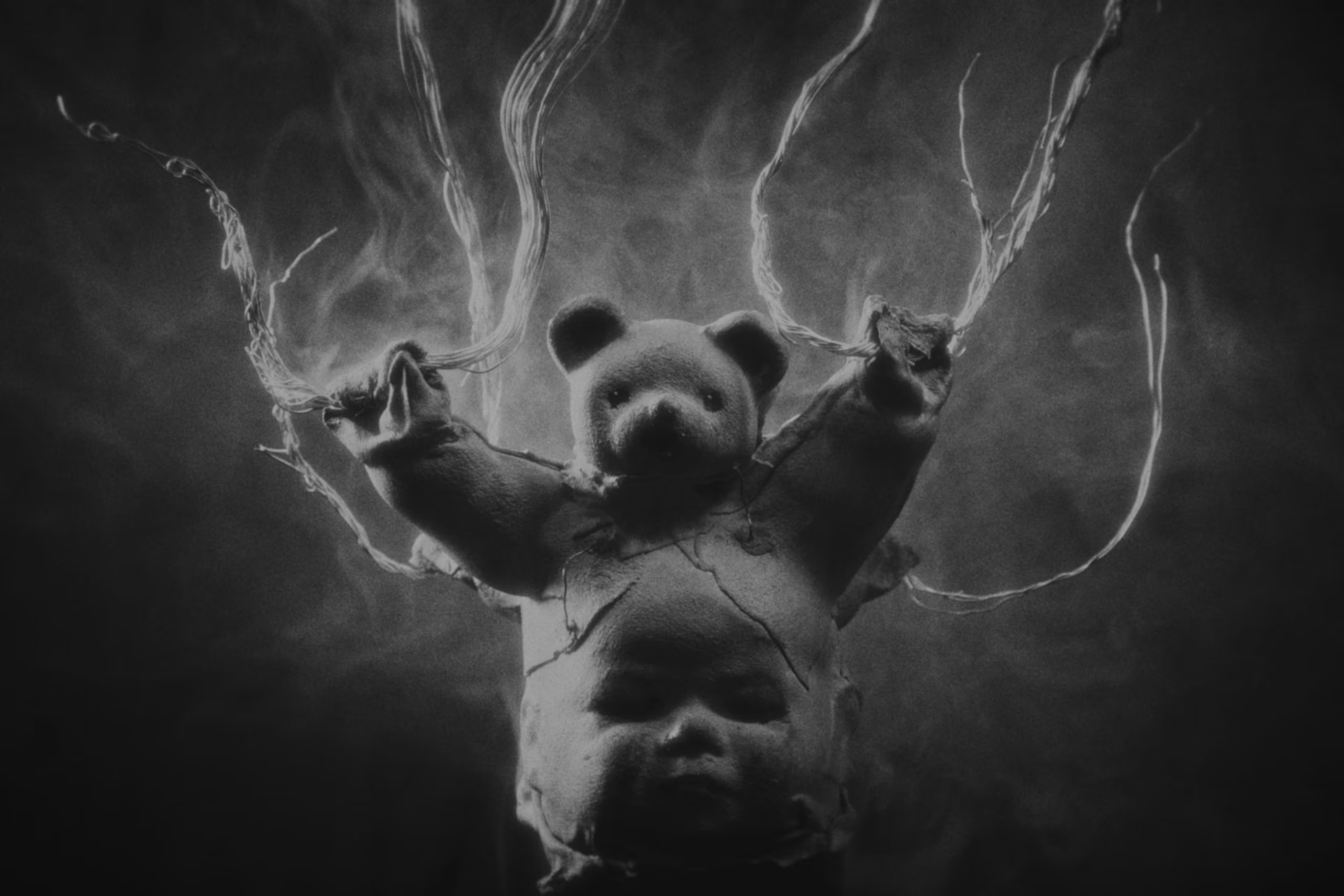
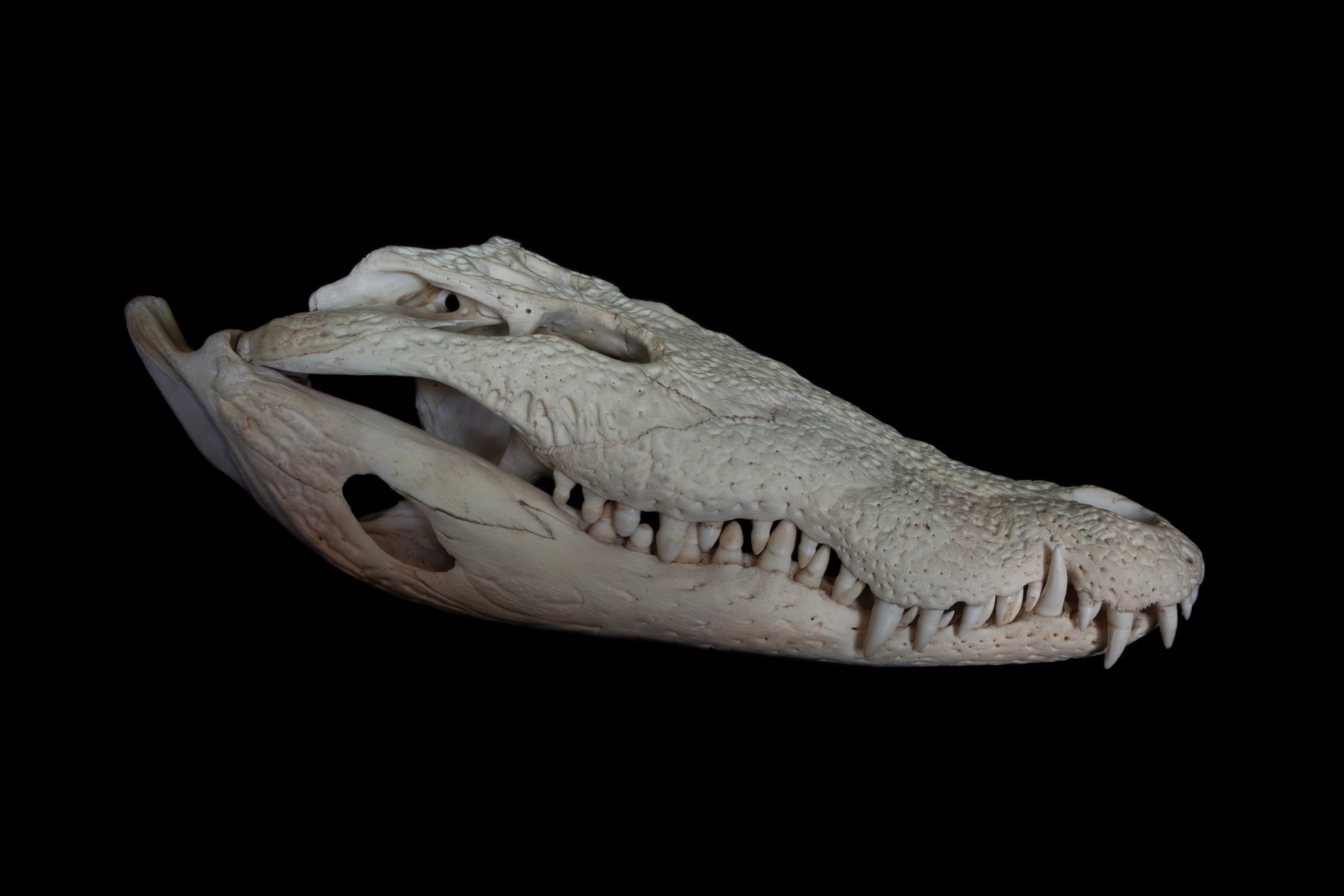
“The gothic lineage extends as far back as modernity and the shadows cast by the dazzling light of the Enlightenment,” says Stach Szabłowski, curator of Gothic Fever alongside Joanna Stembalska and Ewa Szabłowska. “In the exhibition, we present contemporary interpretations of this tradition, mutating under the influence of technology, pop culture, horror, video games, and the internet.”
Playing with Dread, Darkness, and Death
Gothic as a phenomenon channels the capacity to traverse boundaries—not only geographical ones, but those dividing artistic disciplines, high and low cultural registers, and worldview from lifestyle. The exhibition will reveal gothic’s contemporary potential—performative and aesthetic—foregrounding a sensibility that theatricalizes reality through costumes, masks, scenography, and ritual.
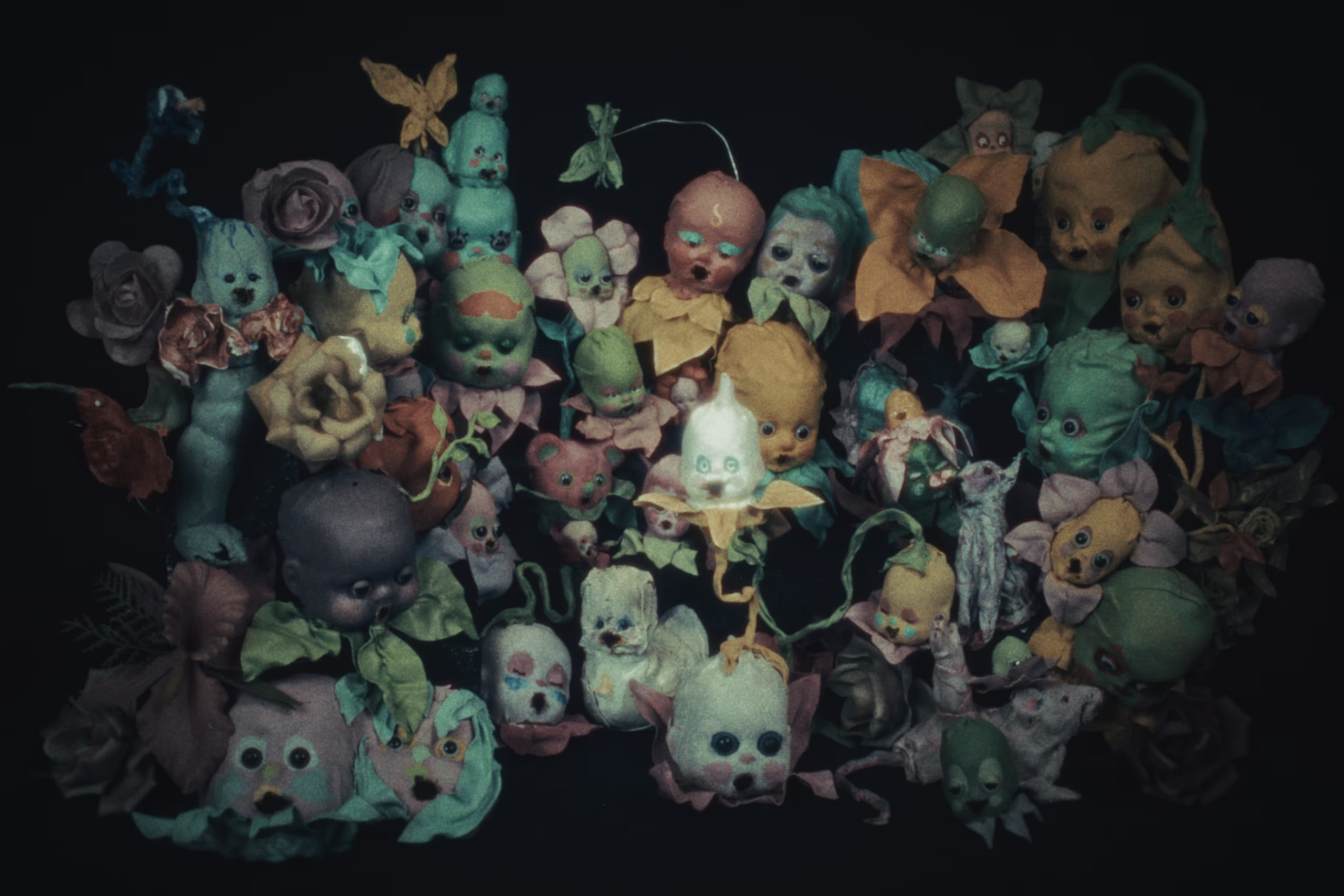
Among the works addressing this theme, the exhibition will feature Maria Joranko’s SIN DESTINO (NO FATE), an installation of figures both seraphic and grotesque, mashed into the body of electric guitars, to be activated during a sound performance at the exhibition’s opening. Theo Montoya explores Tropical Gothic’s queer resonances in his short documentary Son of Sodom, in which the unforgiving sun of Medellín scorches salvation, irradiating darkness, violence, and the existential dread of a young generation. Maurycy Gomulicki’s photographs from the Zombie Catharsis series—a celebration of street fashion and dark carnival—document the fever-dream of mass street rituals taking place in Mexico City.
Gothic sensibility is often diminished with the reputation of a phase—excessive, eventually outgrown. The exhibition proposes an alternative perspective: that through art, we can experience the sublime without tipping into the ridiculous; and that we can play with dread, darkness, and even death on our own aesthetic terms.
Symptoms of a Tropical Fever
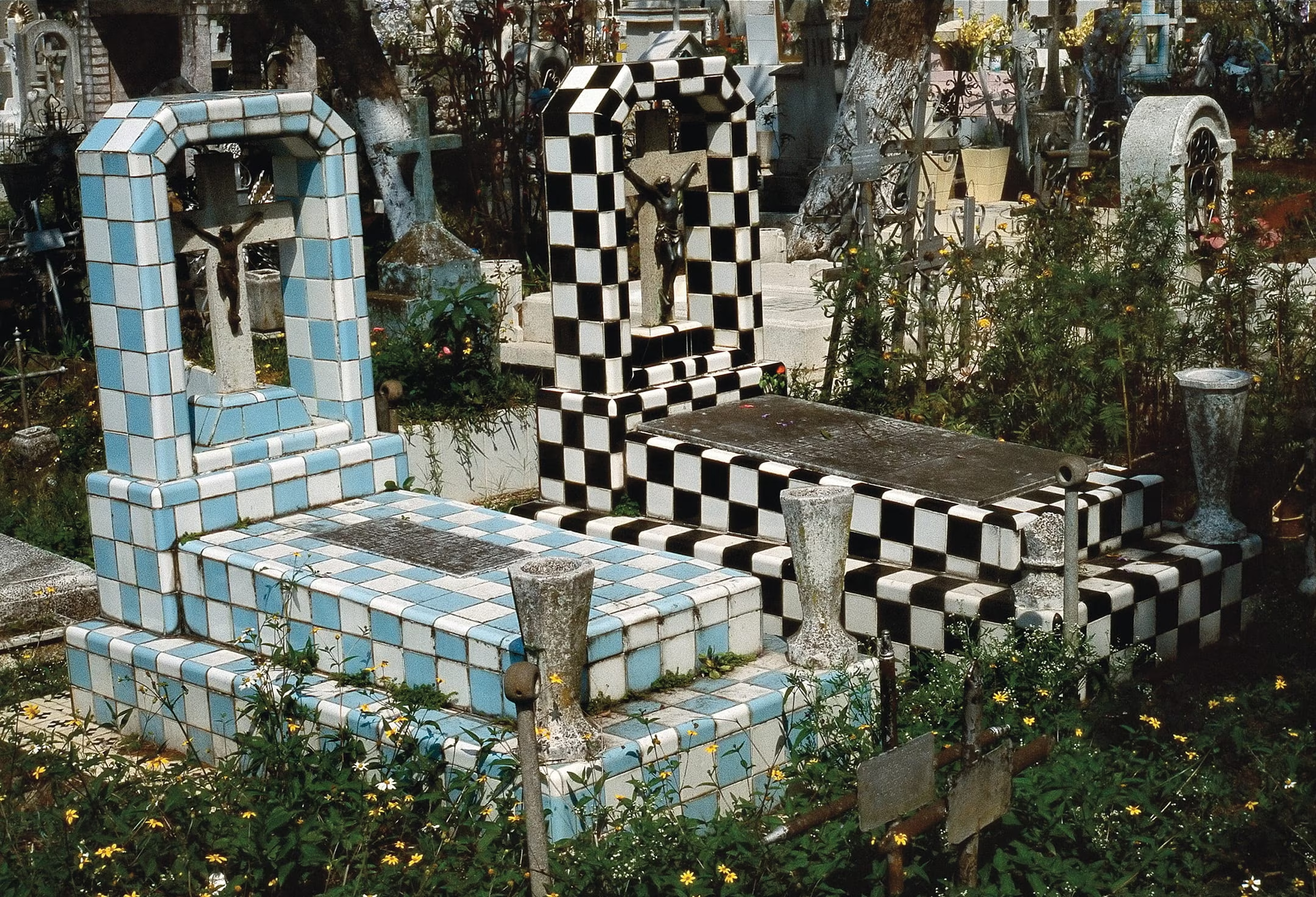
At Studio BWA Wrocław, visitors will encounter video works, animations, paintings, photographs, and installations by artists from Latin America and Poland. “Although Latin America and Central Europe are separated by vast geographical distance,” the curators explain, “they are bound by a post-Catholic imagination and the imposed status of former peripheries.” The selection of works highlights the diversity and range of the Tropical Gothic legacy, from serious reflection on Last Things while clad in gothic costume to playful engagement with gothic convention through critical pastiche and cosplay. The exhibition’s design, by the Nihilist Church, evokes the frames of a horror movie, drawing upon the classics of expressionist cinema while reaching for the exotic flowers and bloody roses of Tropical Gothic’s fecund imaginary.
Within the exhibition, the lushness, sensuality, and corporeality of Tropical Gothic take root in the Central European imagination—misty, shaken by cold shivers, and predisposed toward spiritual brooding. The temperatures of gothic fantasy may differ, yet we believe they are symptoms of the same fever.
The opening of Gothic Fever will take place on Friday, July 24, at 7:00 p.m. During the New Horizons Festival (25.07–2.08), the exhibition will be open daily from 12:00 to 8:00 p.m. After the conclusion of the festival, it will be open Wednesday through Friday from 2:00 to 6:00 p.m., and weekends from 11:00 a.m. to 6:00 p.m.
The project is supported by the British Council.
- Artists: Niles Atallah, Maurycy Gomulicki, Konrad Gubała, Jerónimo Hagerman, Maria Joranko, Cristóbal León and Joaquín Cociña, Nihilist Church (Justyna Baśnik, Paweł Baśnik, Jędrzej Sierpiński), Theo Montoya, Mrozia 11, Wiktor Stribog, and Aleksandra Waliszewska
- Curators: Joanna Stembalska, Ewa Szabłowska, Stach Szabłowski
- Exhibition design: Nihilist Church (Justyna Baśnik, Paweł Baśnik, Jędrzej Sierpiński)
- Visual identification: Zbiok (Sławek Czajkowski)
- Exhibition trailer: Alicja Kielan
- Production: Monika Muszyńska, Sara Szczegóła
- Assembly: Daria Chraścina, Jakub Jakubowicz, Tomasz Koczoń, Daniel Mroczyński
- Promotion: Agata Kalinowska, Berenika Nikodemska, Jagoda Olczyk, Żaneta Wańczyk
- Audience engagement: Elia Pakura
- Editorial oversight and translation: Joanna Osiewicz-Lorenzutti and the strona 895 | page 895 team
- Exhibition partner: British Council
- Media patrons: TVP3 Wrocław, TVP Info, Radio RAM, Radio Wrocław, Radio Wrocław Kultura, Pismo Artystyczne Format, Szum, Mint Magazine
- BWA Wrocław Program Director: Katarzyna Roj
- BWA Wrocław Director: Maciej Bujko
- Organizers: BWA Wrocław Galleries of Contemporary Art, New Horizons Association