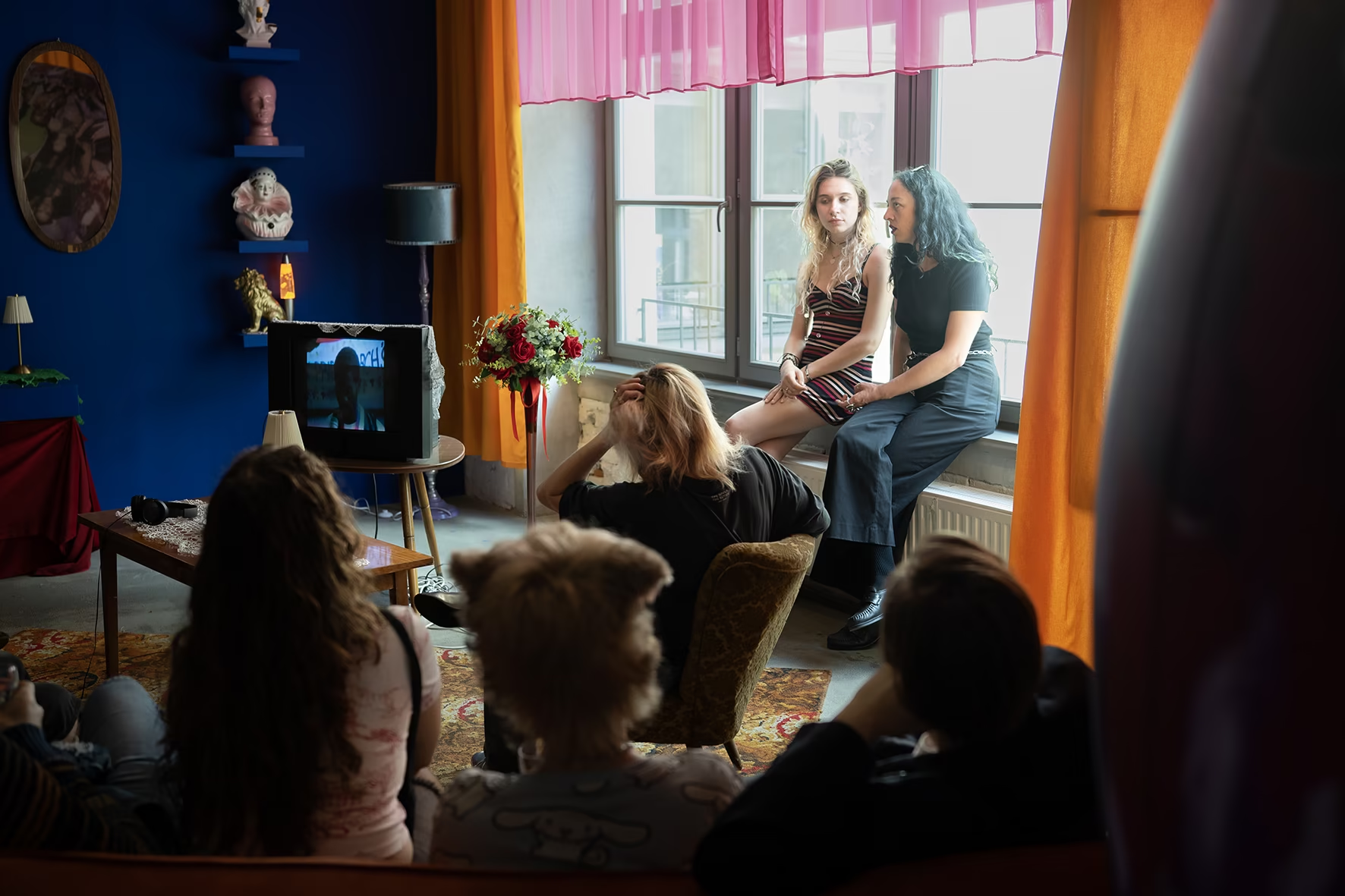
Into the Looking Glass – exhibition by Agnieszka Sejud
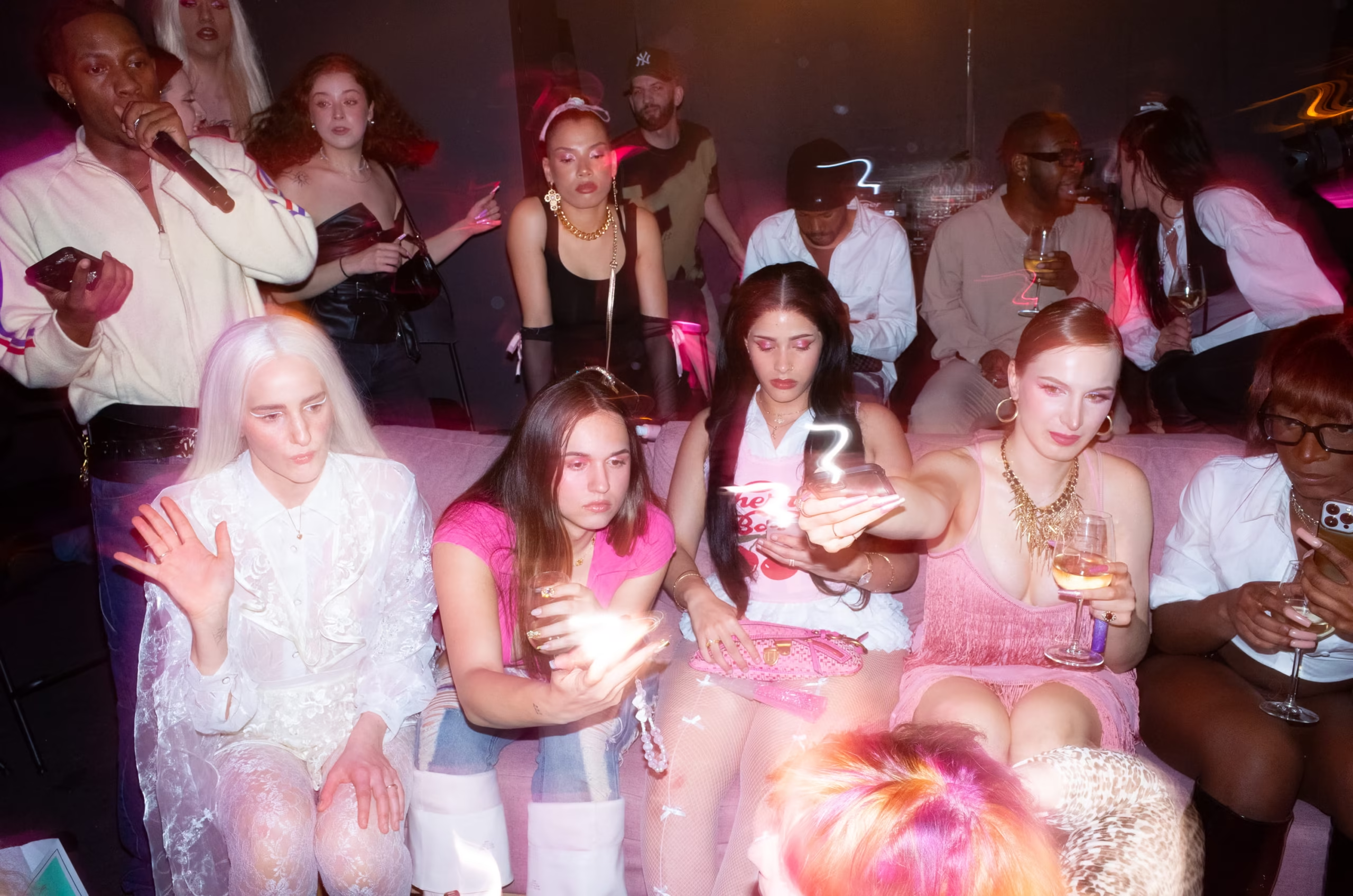
Into the looking glass, as through a mirror, a world appears: that of ballroom. A culture born of an act of resistance against discrimination. A community thriving through collective imagination. At Studio BWA Wrocław, as part of Pride Month, curator Amy N. Muhoro and artist Agnieszka Sejud will present not only the history of ballroom, but, above all, a story about the strength and beauty contained in queer body politics, and in the rituals and art created by the ballroom community.
We enter a salon. Sofas, carpets, curtains, and fabrics in shades of pink layer a boudoir atmosphere, warm and welcoming. We feel comfortable and safe, and so give in to the pull of curiosity. In the second room stands an old wardrobe; behind its doors, evening gowns and all manner of costumes are hidden. More outfits are draped on mannequins gathered around the space. The experience is like stepping through the looking glass into Wonderland. Into a world that, although parallel, feels like the right one. In this way, Studio BWA Wrocław will be transformed for the duration of Into the Looking Glass. Amy N. Muhoro and Agnieszka Sejud will open the doors of ballroom culture for all, ushering us into a space of celebration: of femininity, gender fluidity, and community. Let the ball begin.
The Power of Community, the Force of the Body, and the Gesture of Resistance
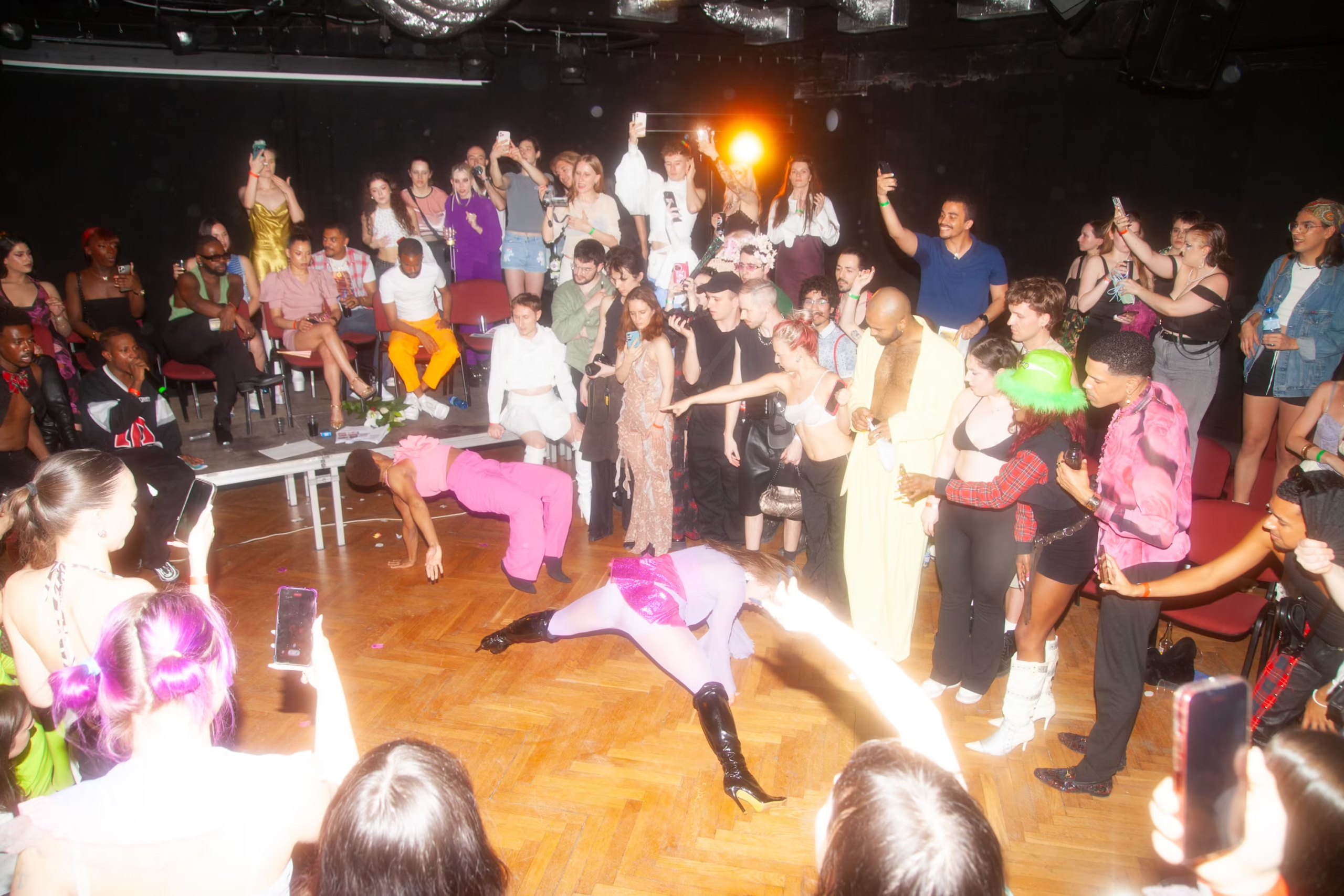
Ballroom culture originates in New York City’s Harlem. It was created by Black and Latinx trans women in the 1960s, as an act of resistance against the racial discrimination experienced by participants in drag queen beauty pageants, and against discrimination based on identity and sexual orientation in general. The exhibition Into the Looking Glass will show how this culture adapted to local conditions and continues to develop. In Poland, there are both so-called Major Houses, which connect members of the ballroom community, building the bonds of chosen family through collective activities, and smaller Kiki Houses, serving as spaces for fun and practice, especially for younger participants. Balls—the most important events organized by the community—take place in many cities, including Wrocław.
The exhibition will feature photographs, video works, and immersive objects that engage the senses. These elements constitute a social archive conveying ballroom culture and a focus on survival and collective memory. Beyond providing documentation of a phenomenon, Into the Looking Glass will narrate a tale about the power of community, the force of the body, and the gesture of resistance. “The exhibition will bring the contemporary Polish ballroom scene closer through visual and performative language. It will become an archive of a transcultural process within which traditions rooted in Harlem transformed into a global movement, before finding their place and a new voice in the Polish social landscape,” explains the exhibition’s curator, Amy N. Muhoro, a Kenyan artist and researcher who, while living in Warsaw, was a member of the Polish ballroom community. She was invited to collaborate by Agnieszka Sejud, a visual artist and photographer, who notes that the choice felt obvious to her: they share an interest in gender and queer issues, with Muhoro then bringing to the project two distinct perspectives on ballroom—from within Europe and beyond its borders.
When the Emancipatory Gesture Becomes Aesthetic, and the Aesthetic Becomes a Tool of Resistance
The image of ballroom emerges from the work of Agnieszka Sejud, an artist whose practice develops from the dismantling of systems of oppression and the affirmation of individual freedom. For this exhibition, she redirects that energy toward queer body politics and community, attempting to capture the moment when an emancipatory gesture becomes aesthetic, and the aesthetic becomes a tool of resistance. “The exhibition Into the Looking Glass,” explains Sejud, “presenting the Houses, costumes, and collective memory of the community, will function as an archaeology of a living movement—one that, from the ruins of exclusion, inscribed its own chapter in the cultural history of the twentieth and twenty-first centuries.”
The exhibition will additionally feature guest appearances by members of the ballroom community: Lila Dziedzic (House Versace), the costume and set designer of Into the Looking Glass, who will share the story of her transition; Karolina Jeż, a photographer documenting balls; and Kenyan filmmaker and writer Njoroge Muthoni, through whose documentary on ballroom we encounter the culture from the perspective of another continent. There will also be costumes designed by Tomek Dutka, Lila Dziedzic, Kamila Revlon and Mikołaj Thiel on display. The accompanying program has been developed in collaboration with the Kultura Równości [Culture of Equality] Association.
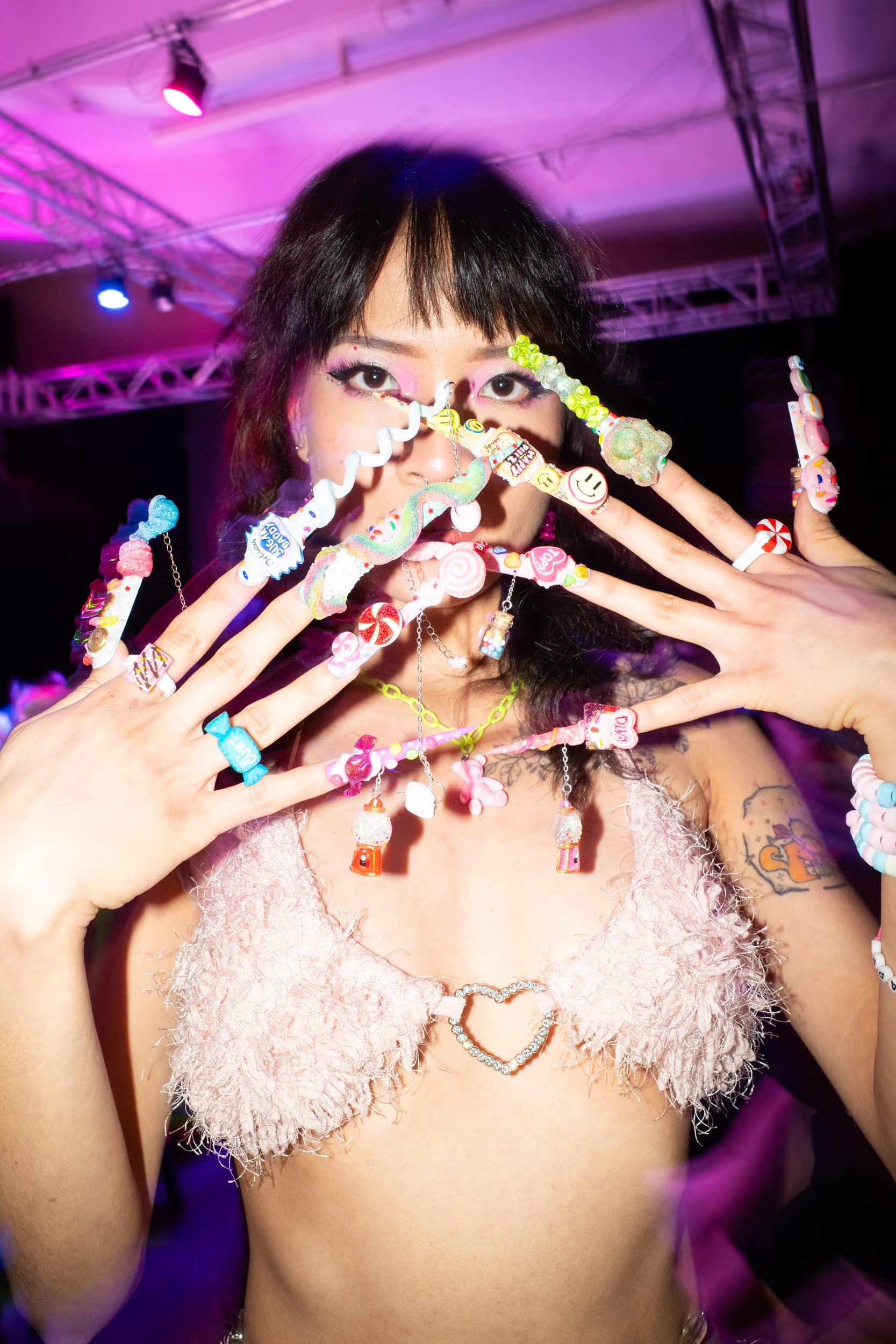
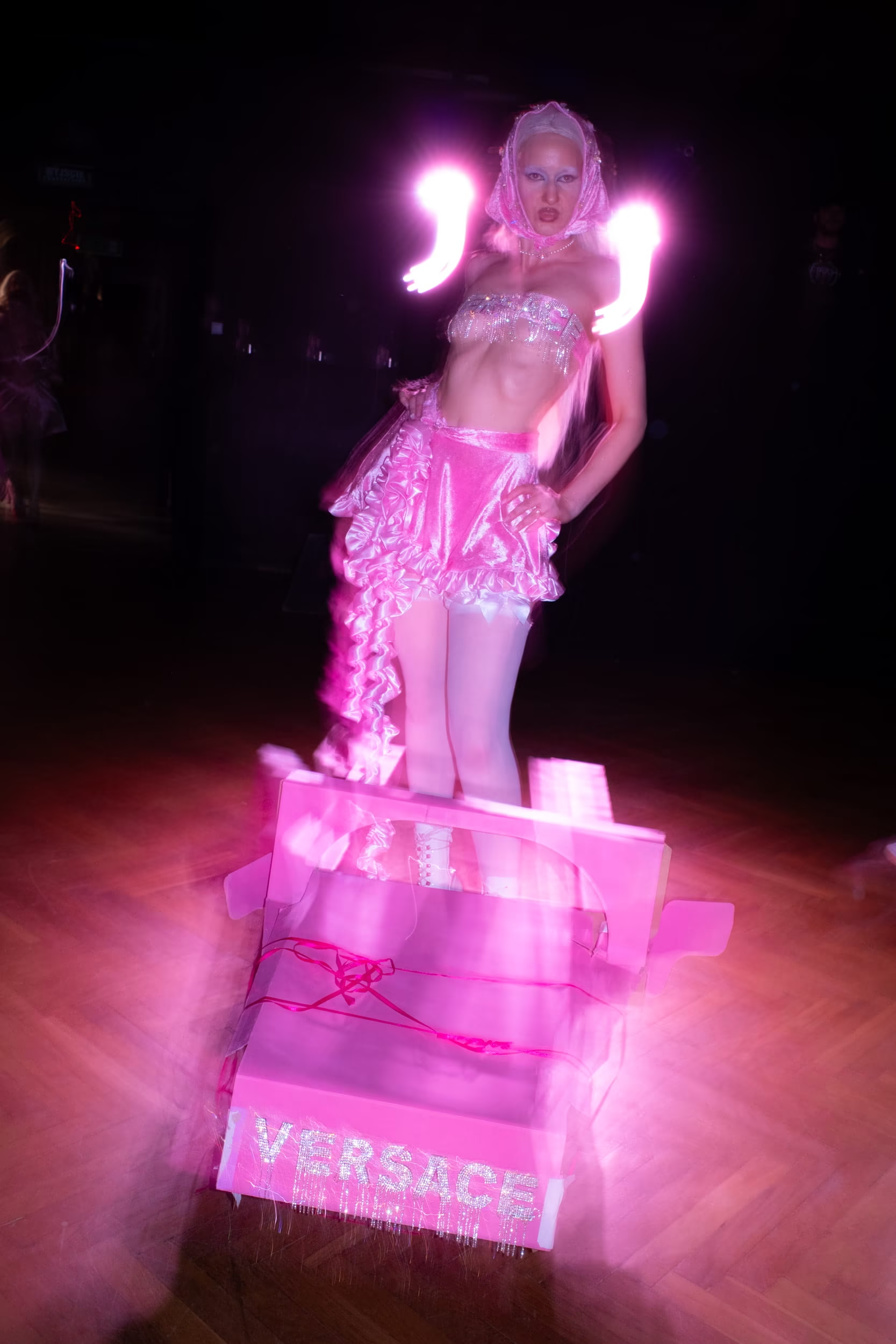
Into the Looking Glass will speak to those interested in the LGBTQIA+ community and its history, social and political movements, and subcultures. It will appeal to enthusiasts of fashion, dance, and voguing. And it will channel the power to move all who wish to join us and the ballroom community in a celebration of freedom and diversity—and to straight up have a fantastic time.
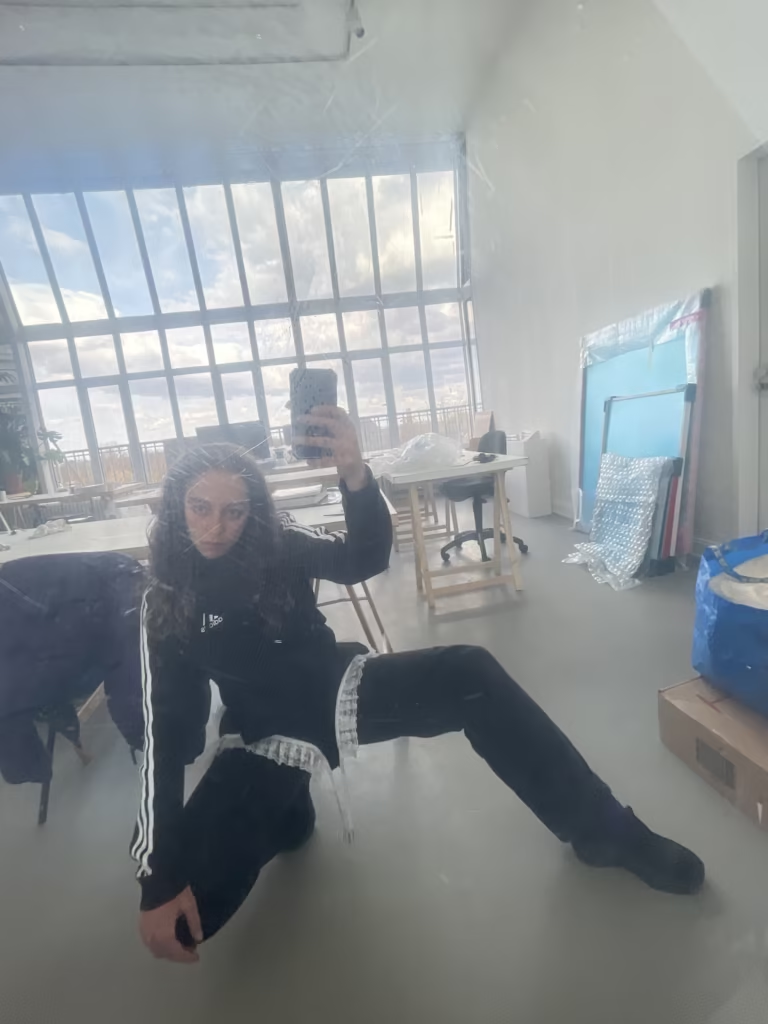
Agnieszka Sejud
is a visual artist working in analogue and digital photography, collage, artist’s publications, installations, and video art. A characteristic feature of her practice is the deliberate deformation of the image as an expressive vehicle for layering ideas and emotions. Sejud uses a combination of media as tools for critical reflection on identity, individual freedom, and the oppressive structures that delimit human autonomy. Her practice deconstructs and dismantles these regimes through an experimental approach. Sejud’s work has been presented in a range of international contexts, underscoring its universal resonance in contemporary visual arts discourse. She holds an MFA from HFBK Hamburg and an LLM from the University of Wrocław, and studied at Makerere University in Kampala, Uganda.
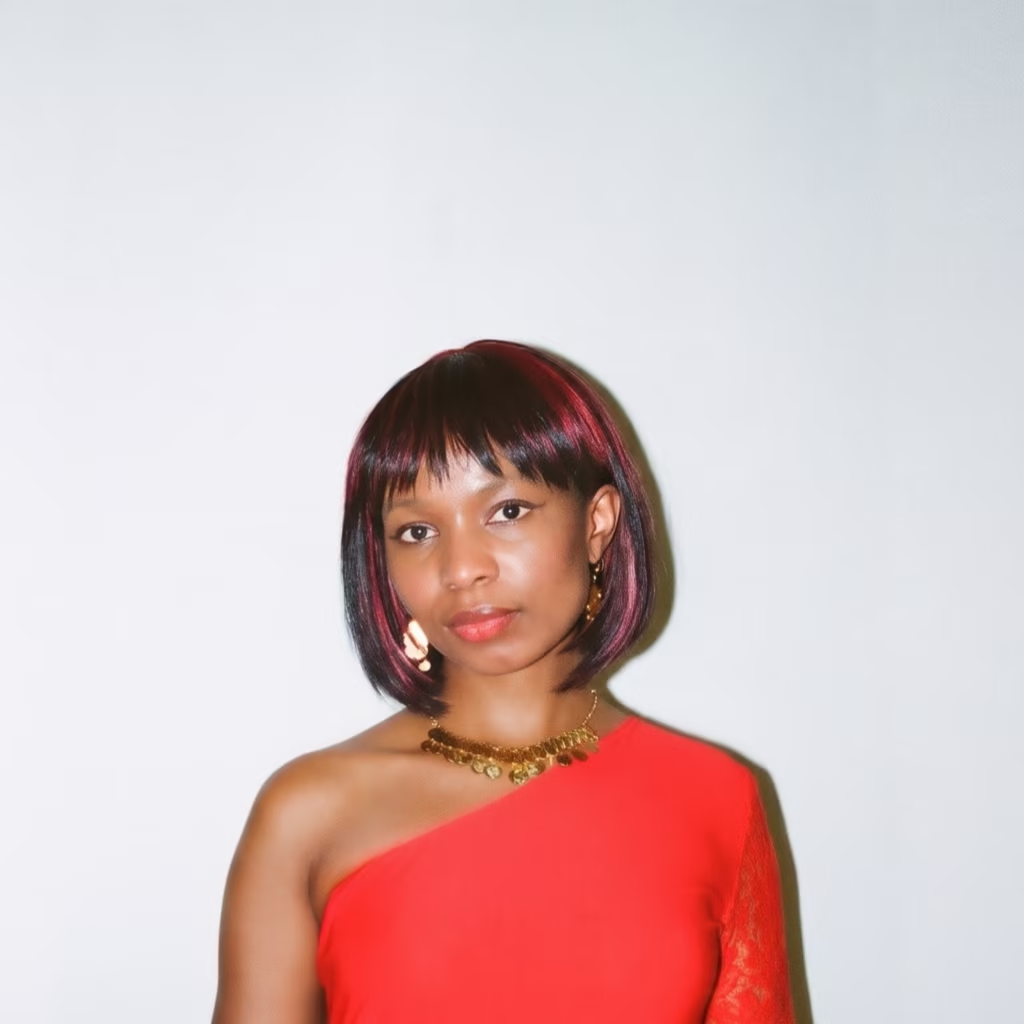
Amy N. Muhoro
is a Kenyan multidisciplinary artist, performer, researcher, and curator. Her practice engages with the politics of cultural transmission and the permeability of diasporic consciousness. Working through experimental, often deeply personal methodologies, she investigates the processes of creating, exchanging, and protecting meaning within networks of human relationships, shedding light on their enduring traces in the histories of communities across Africa and the wider African diaspora. Adopting the role of anthropologist, she initiates critical discourse on shared histories that resist geographical delimitation. A recurring element in Muhoro’s practice is the examination of pervasive surveillance as an unspoken architecture of modernity. Her work has been presented in Nairobi at Creatives Garage and the Goethe-Institut, in Warsaw at the Museum of Modern Art, Zachęta – National Gallery of Art, and the Academy of Fine Arts, and in Wrocław at the WRO Art Center.
- Artist: Agnieszka Sejud
- Guest artists appearances: Lila Dziedzic, Karolina Jeż, Njoroge Muthoni
- Guest designers appearances: Tomek Dutka – Luka Hot Couture, Lila Dziedzic, Kamila Revlon Design, Mikołaj Thiel
- Exhibition curator: Amy N. Muhoro
- Studio BWA Wrocław curator: Joanna Stembalska
- Visual identification: Karolina Ciebiada
- Production: Natalia Budzińska, Monika Muszyńska, Sara Szczegóła
- Assembly: Daria Chraścina, Jakub Jakubowicz, Tomasz Koczoń, Daniel Mroczyński
- Accessibility coordination: Magdalena Weber
- Audience support: Iwona Kałuża, Elia Pakura
- Promotion: Agata Kalinowska, Berenika Nikodemska, Jagoda Olczyk, Żaneta Wańczyk
- Editorial, oversight, and translation: Joanna Osiewicz-Lorenzutti and the strona 895 | page 895 team
- Exhibition partners: Stowarzyszenie Kultura Równości, Concordia Design Wrocław, Intersection Photo Festival
- Media matronage: Magazyn Replika
- Media patrons: Radio RAM, Radio Wrocław, Radio Wrocław Kultura, TVP3 Wrocław, TVP Info, Pismo Artystyczne Format, Miej Miejsce, Mint, K MAG
- BWA Wrocław program director: Katarzyna Roj
- BWA Wrocław director: Maciej Bujko
- Organizer: BWA Wrocław Galleries of Contemporary Art
The exhibition Into the Looking Glass forms part of the Intersection Photo Festival programme, which the Voelkel Foundation, in collaboration with Concordia Design Wrocław, OKiS in Wrocław and SWPS University, is organising this year under the theme The Image of Desires, thereby raising questions about the artist’s identity in a world saturated with images. “A photographer’s creativity does not exist in a vacuum; it is intertwined with craft and function, and the boundary between the two is fluid. “That is why it is difficult to define a photographer unequivocally: is he an artist exploring personal themes, or a craftsman serving function alone? Between these poles lies a vast spectrum of application and creativity,” says curator Jacek Kołodziejski. The Intersection Photo Festival is therefore a space where professional craftsmanship meets boundless imagination. The heart of the Festival will be Concordia Design Wrocław, where meetings with outstanding photographers, debates, photography workshops and portfolio reviews will be held. Among the galleries hosting events as part of the Festival, alongside Studio BWA Wrocław, will be Bulvary, Galeria FOTO-GEN, Galeria Gua Collective, Galeria OKO and Centrum Witelona.