The Crystal Palace
An icon of modernity, the eighth wonder of the world, the “Grand Interior.” The Crystal Palace exhibition, which is split between two BWA Wrocław venues, reflects on glass as a symbol of the industrial age – its transparency and the hierarchies of museum display. The deliberately constructed cascading frames, the changing viewpoints, and the play of light and reflections invite visitors to look attentively and return to the same works.
„So strong was the effect of its romantic beauty on anyone who saw it that you could find depictions of the palace on the walls of homes in the most remote German villages.” – Lothar Bucher.
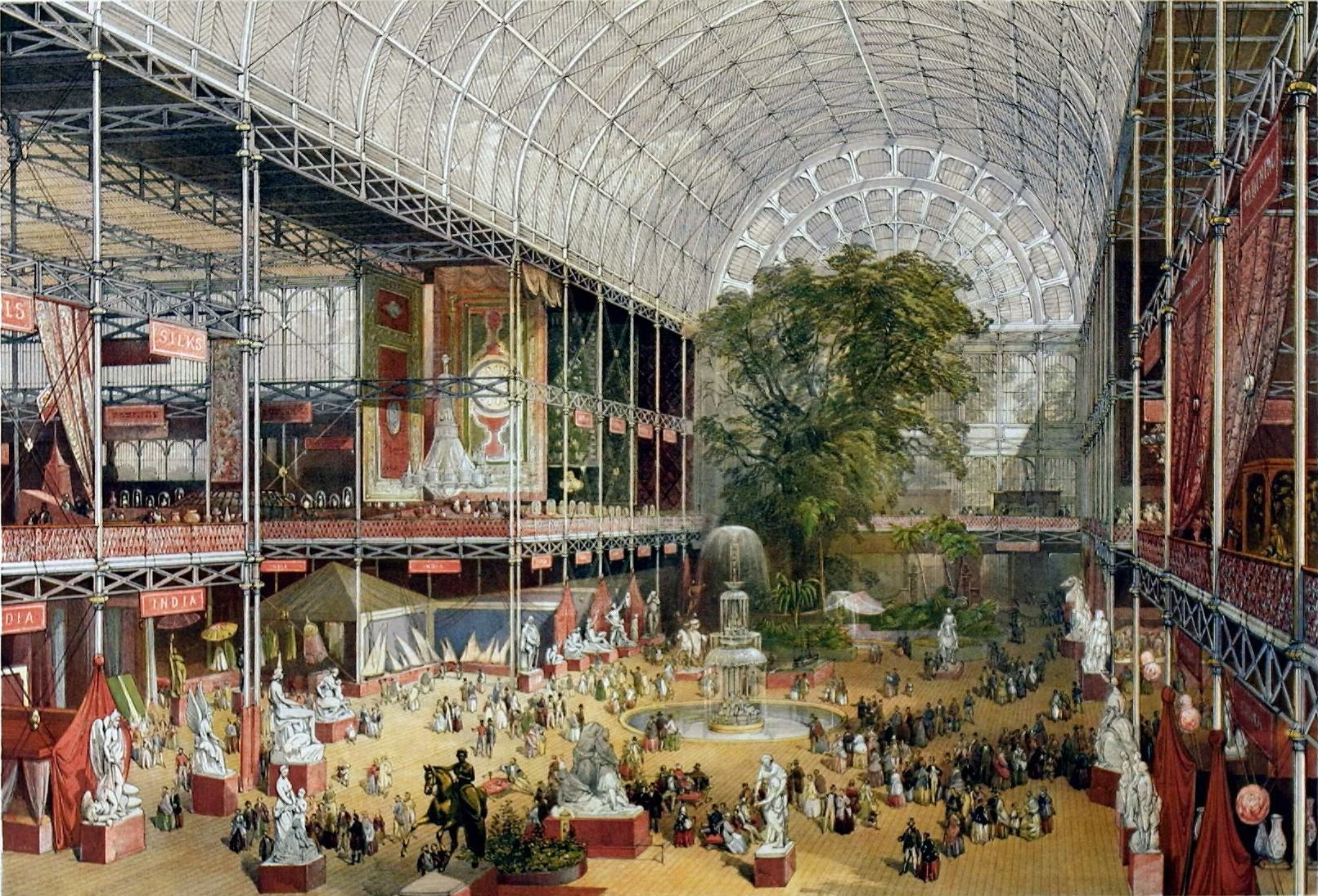
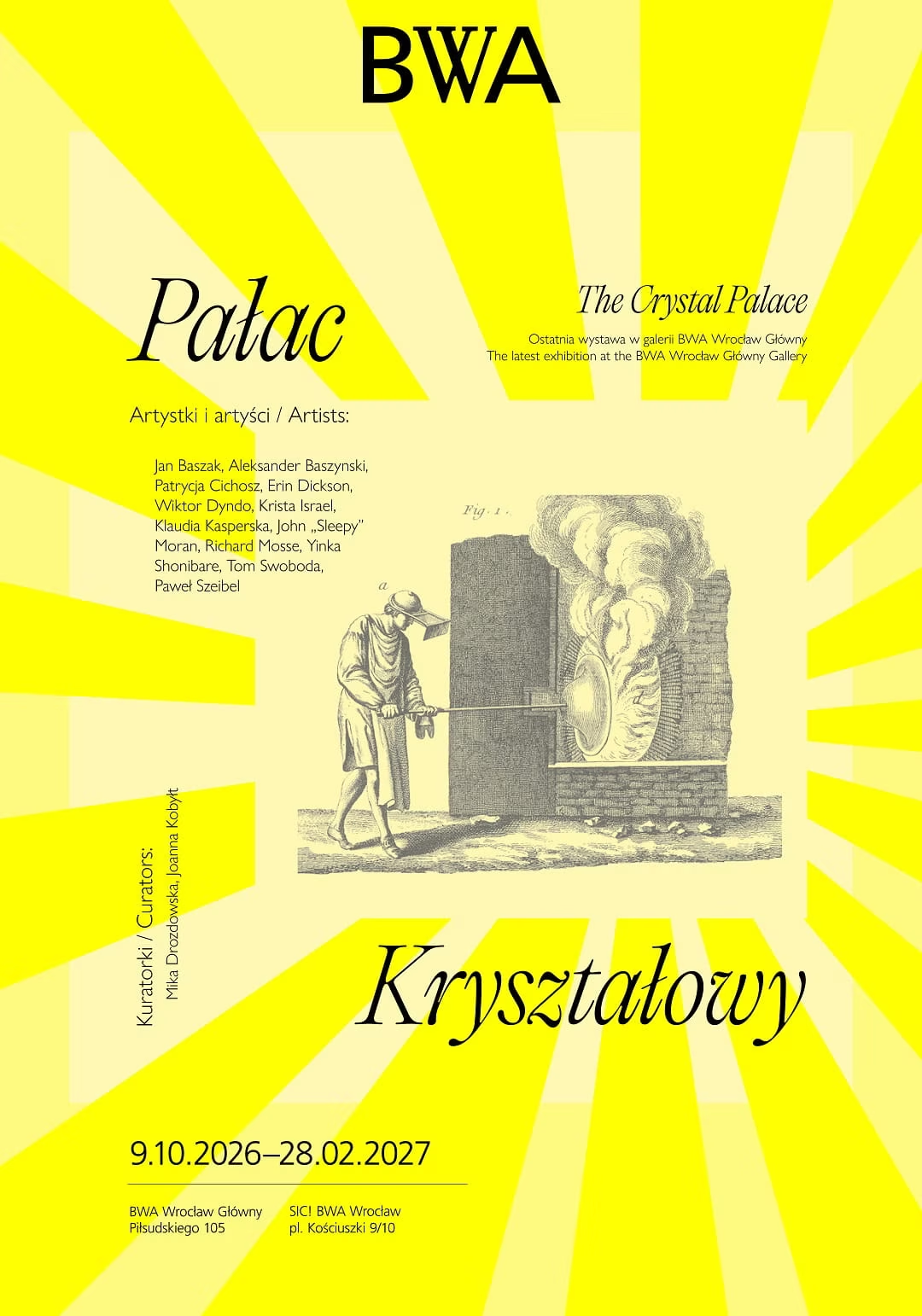
The exhibition will be available for viewing from October 9, 2026, in two galleries: SIC! BWA Wrocław and BWA Wrocław Main Station. It was initiated by two curators, Mika Drozdowska and Joanna Kobyłt, who are responsible for the program of these spaces. The Crystal Palace will be the last event at the BWA Wrocław Main Station gallery, from which BWA Wrocław will move out in the spring of 2027. The exhibition presents works by an international group of artists, who use a variety of media, such as painting, photography, sculpture, installations, light, and glass objects.
The Crystal Palace – the eighth wonder of the world
The exhibition takes as its point of departure the figure of the Crystal Palace. Designed for the Great Exhibition by the flower grower, horticulturist, and greenhouse designer Joseph Paxton, the monumental glass edifice was erected in London’s Hyde Park in 1851. Being the first structure to be made entirely of prefabricated cast-iron and glass elements, the Crystal Palace was considered by many the eighth wonder of the world. The work on the palace began on September 26, 1850, and was completed in January 1851.
The building became a symbol of the industrial age, imperial ambitions, and faith in progress. It went down in the history of architecture, art, and literature as an icon of social utopias (Chernyshevsky, Żeromski) and of dystopian diagnoses of modernity (Dostoevsky, Prus). Although, for a long time, the British middle classes remained wary of this embodiment of modernity, the Crystal Palace proved a great success from the outset. The building captivated the public and drew crowds of visitors from around the world. After the Hyde Park exhibition closed, Paxton’s glass structure was dismantled within three months and reassembled in 1854 on the other side of London, on Sydenham Hill. It was here that Joseph Paxton died in 1865 – close to his most famous creation, which survived him by seventy-two years. In 1936, the Crystal Palace was destroyed by fire.
Two galleries, one exhibition
The exhibition is divided into two venues: BWA Wrocław Main Station gallery and the SIC! BWA Wrocław gallery. The Main Railway Station – a historic building dating from 1855–1857 – architecturally alludes to the Crystal Palace. The BWA Wrocław Main Station gallery program, developed by Joanna Kobyłt, has engaged with the context of the place and worked through the era of modernity, whose consequences we all still feel today. SIC!, meanwhile, is the only public gallery in Poland dedicated to contemporary glass. Its program brings together experimental artistic practices and the glassmaking tradition of Lower Silesia, treating glass both as a material and as a point of departure for reflecting on transparency, visibility, and fragility.
The featured works represent a range of media: painting (Wiktor Dyndo, Patrycja Cichosz), photography (Tom Swoboda, Richard Mosse), sculpture (Jan Baszak, Yinka Shonibare, Erin Dickson), spatial installations (Sasza Baszynski’s crystal tent), sound (as in Krista Israel’s installation), textile sculpture (Jan Baszak), light installation (Klaudia Kasperska), and glass objects (John Moran, Krista Israel, Erin Dickson, Paweł Szeibel). Rather than illustrating the history of the Crystal Palace, they engage in a dialogue with it, opening up a succession of interpretive perspectives.
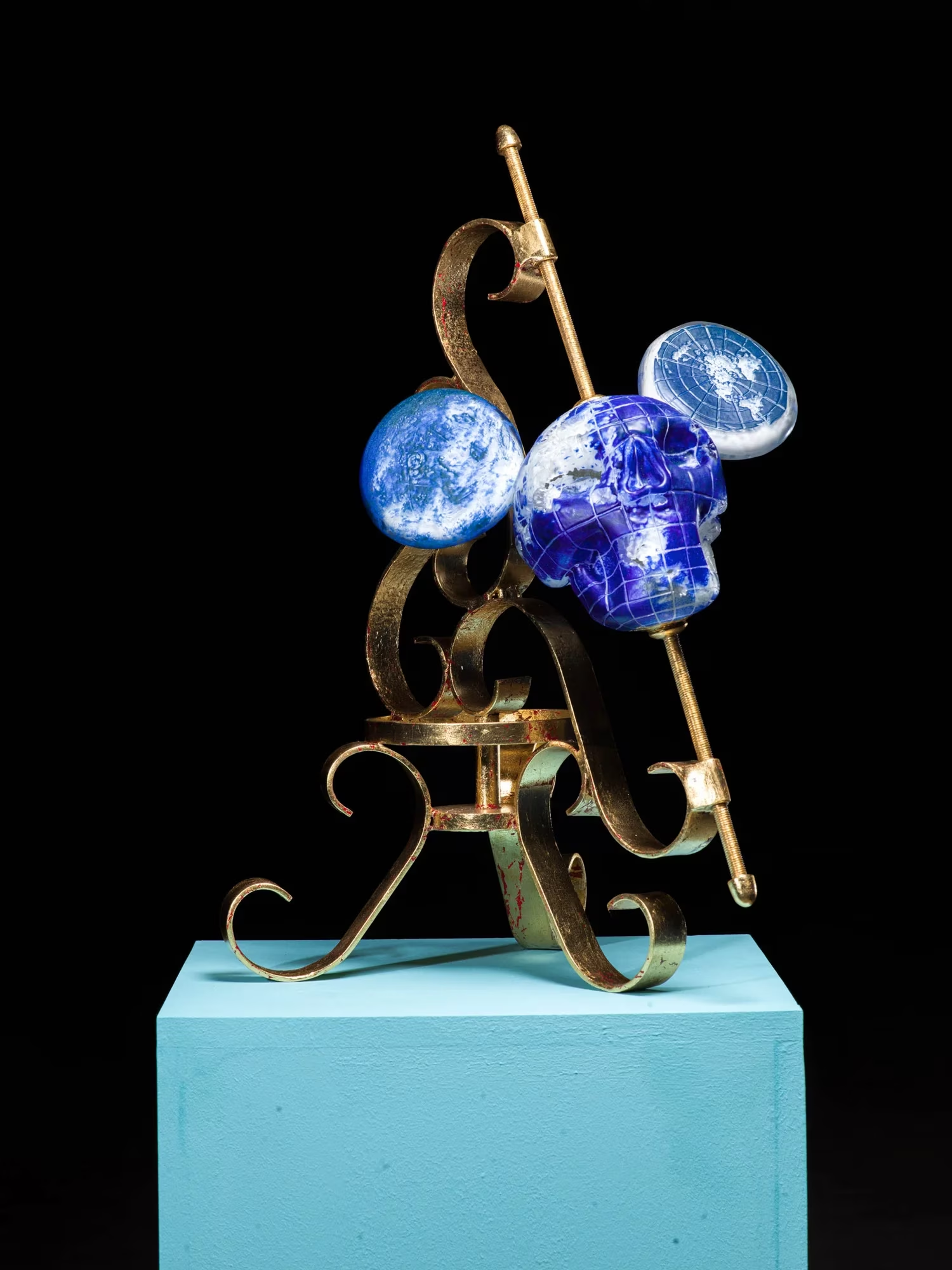
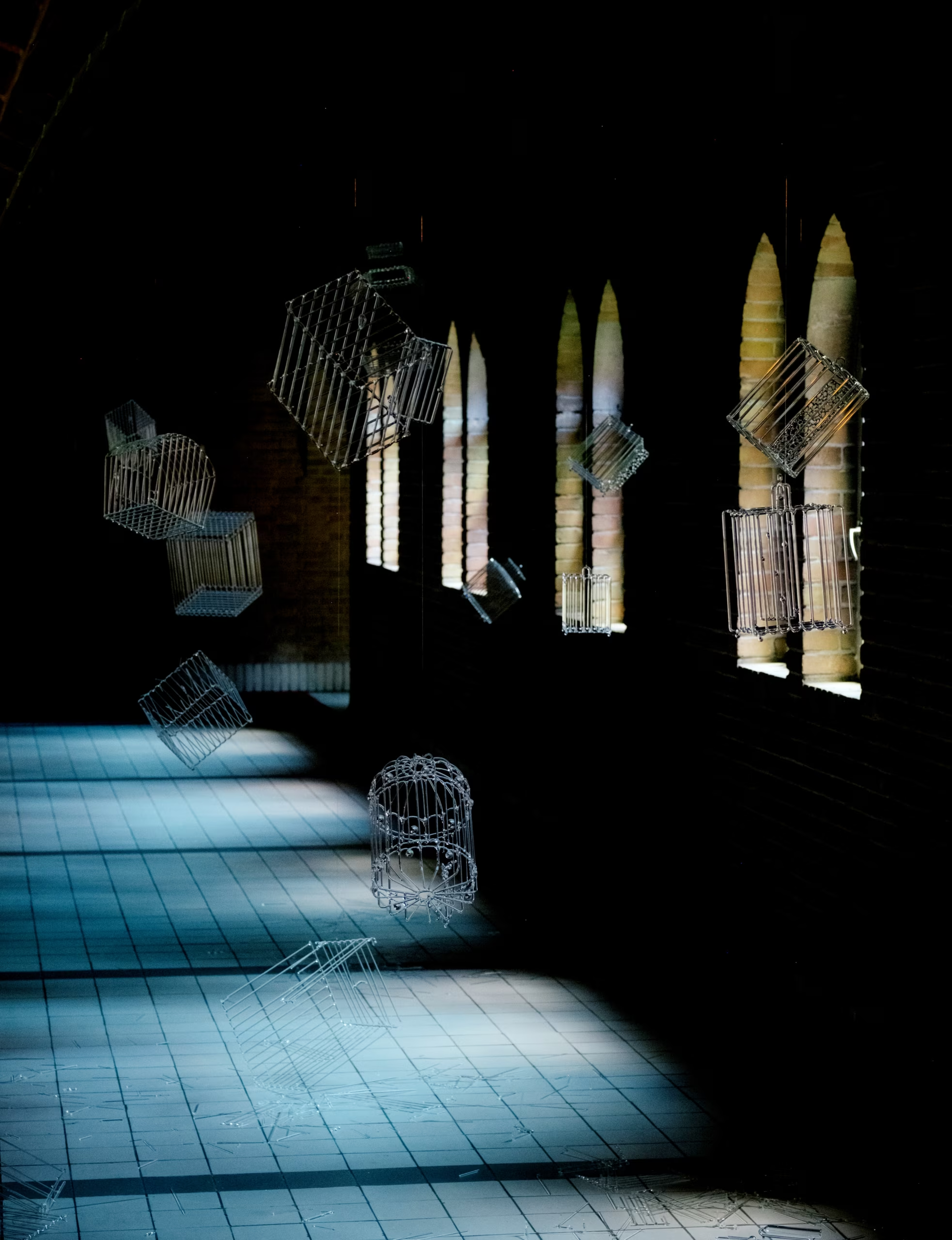
(courtesy of the artist)
One of the motifs binding the artists’ works together is transparency, understood both literally and metaphorically as a way of revealing and concealing, organizing visibility, drawing boundaries, and building relationships between humans, nature, and space. The viewing experience is enhanced by sound, which takes the reception of one of the installations beyond the visual. The narrative is complemented by stereoscopes with pictorial materials, which allude to 19th-century ways of seeing the world and invite reflection on how viewing technologies have changed. The motif of the stereoscope also inspired Szymon Zakrzewski to create the visual identity and exhibition design for The Crystal Palace exhibition.
Exhibition design, cascading frames, and the “exhibitionary complex”
The exhibition is designed to involve viewers in gradual discovery. Visitors do not see everything at once; successive works and the relationships between them are revealed as they move through the exhibition. What remains hidden from one perspective becomes visible from another. The deliberately constructed cascading frames, the changing viewpoints, and the play of light and reflections invite visitors to look attentively and return to the same works again and again.
The exhibition design draws on the aesthetics of excess and the showcasing approach exemplified by the Crystal Palace, specifically the 19th-century phenomenon known as the “exhibitionary complex” (Tony Bennett). The term describes practices of display and viewing common to museums, zoological and botanical gardens, and panoramas. The “exhibitionary complex” imposed a hierarchical and distanced way of looking, shaped social imaginaries, and entrenched relations of power between the viewer and what is put on display. Central to this order was glass architecture – a material that changed the logic of the gaze. Glass pavilions, display cases, and dioramas gave rise to an aesthetic of transparency, exposure, and control. The Crystal Palace exhibition makes a conscious use of glass, which appears both in the displayed artworks and in the design of the display, emphasizing its role in constructing modern and contemporary ways of seeing. The exhibition design establishes viewing axes that allow visitors to notice analogies between the spaces of both galleries and the historic Crystal Palace. The deliberately composed perspectives and frames are intended to evoke associations with the 19th-century architecture of world exhibitions and the ways of seeing characteristic of that period.
Opening schedule and Saturday guided tour
- 9.10, 6:00 p.m. | opening at the BWA Wrocław Main Station gallery
- 9.10, 7:30 p.m. | performative walk with Klaudia Kasperska to the SIC! BWA Wrocław gallery
- 9.10, 8:00 p.m. | the second part of the exhibition opening and a concert by Paweł Romańczuk at the SIC! BWA Wrocław gallery
- 10.10, 2:00 p.m. | guided tour of the exhibition led by the artist and curator (start: SIC! BWA Wrocław gallery, followed by: BWA Wrocław Main Station gallery)
Artists: Jan Baszak (PL), Aleksander Baszynski (UA), Patrycja Cichosz (PL), Erin Dickson (UK), Wiktor Dyndo (PL), Krista Israel (NL), JMB (US/PL), Klaudia Kasperska (PL), John “Sleepy” Moran (US), Richard Mosse (IE), Yinka Shonibare (UK), Tom Swoboda (PL), Paweł Szeibel (PL)
Curators: Mika Drozdowska, Joanna Kobyłt
Exhibition design and visual identification: Szymon Zakrzewski
Production: Gabriela Pezda, Bazyli Stoykov, Patrycja Ścisłowska
Production manager: Monika Muszyńska
Promotion: Agata Kalinowska, Berenika Nikodemska, Jagoda Olczyk, Agata Połeć, Żaneta Wańczyk
Assembly: Ioannis Anastasiou, Bartek Buczek, Łukasz Bałaciński, Daria Chraścina, Jakub Jakubowicz, Daniel Mroczyński, Krzysztof Szczudluk
Assembly manager: Tomasz Koczoń
Audience engagement: Julianna Biesok, Adrianna Duda, Barbara Kaczmarek, Eva Kozárova, Beata Marszałek, Agnieszka Michoń, Joanna Synowiec, Magdalena Weber, Maja Widera
Head of education and audience engagement: Iwona Kałuża
Accessibility coordination: Magdalena Weber
Contracts: Beata Gawrysiuk
Accounting team
Editorial oversight: Joanna Osiewicz-Lorenzutti
English translation: Krzysztof Kowalczyk
Fundraising: Małgorzata Sobolewska, Joanna Sokalska
Main Partner: “Julia” Crystal Glassworks
Partner venues: Good Good
Media patronage: Vogue Polska Living, Contemporary Lynx, Trójka—Program Trzeci Polskiego Radia, Radio RAM, Radio Wrocław Kultura, Radio Wrocław, TVP3 Wrocław, TVP Info, TVP Kultura, Pismo Artystyczne Format
BWA Wrocław program: Katarzyna Roj
BWA Wrocław Director: Maciej Bujko
Organizer: BWA Wrocław
Co-financed by the Ministry of Culture and National Heritage of the Republic of Poland from the Fund for the Promotion of Culture—a special-purpose state fund.