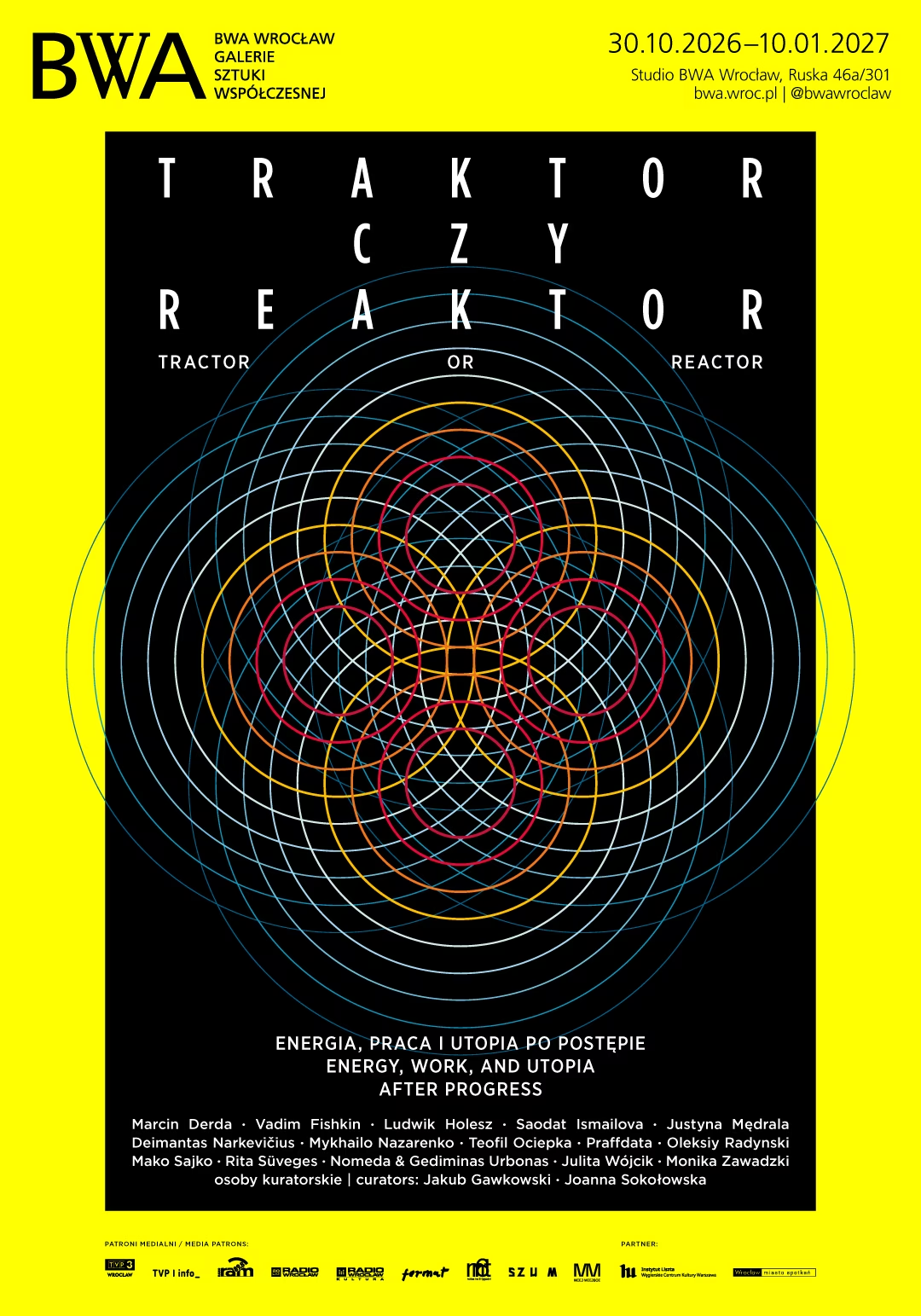
Tractor or Reactor: Energy, Labor, and Utopia After Progress
The exhibition Tractor or Reactor: Energy, Labor, and Utopia After Progress traces the history of energy transitions in Eastern Europe – from postwar socialist modernization and atomic utopia, through the political transformations of 1989, to contemporary geopolitical tensions and the planet’s ecological condition. It offers a novel perspective on the history of the region and the visions and dreams that shaped it. Drawing on the region’s lived experience, it opens a discussion about climate change, an existential calamity of the twenty-first century.
Curated by Jakub Gawkowski and Joanna Sokołowska, Tractor or Reactor examines energy transitions in Eastern Europe and transformations catalyzed in the sphere of labor and in the relationship between humans and the natural environment. The exhibition moves through the socialist and post-socialist periods and into the realm of speculative visions of the future. Rooted in Eastern European history, it reframes the past to understand a turbulent present. Curator Jakub Gawkowski explains: “Drawing on the history and experiences of Eastern Europe – from its reconstruction after the Second World War through the Chernobyl disaster and the transformations of 1989 – we can scrutinize the condition of the planet. In this framing, the Eastern Bloc becomes a laboratory, connecting research into the past with an envisioning of the future.”
The Story of Energy
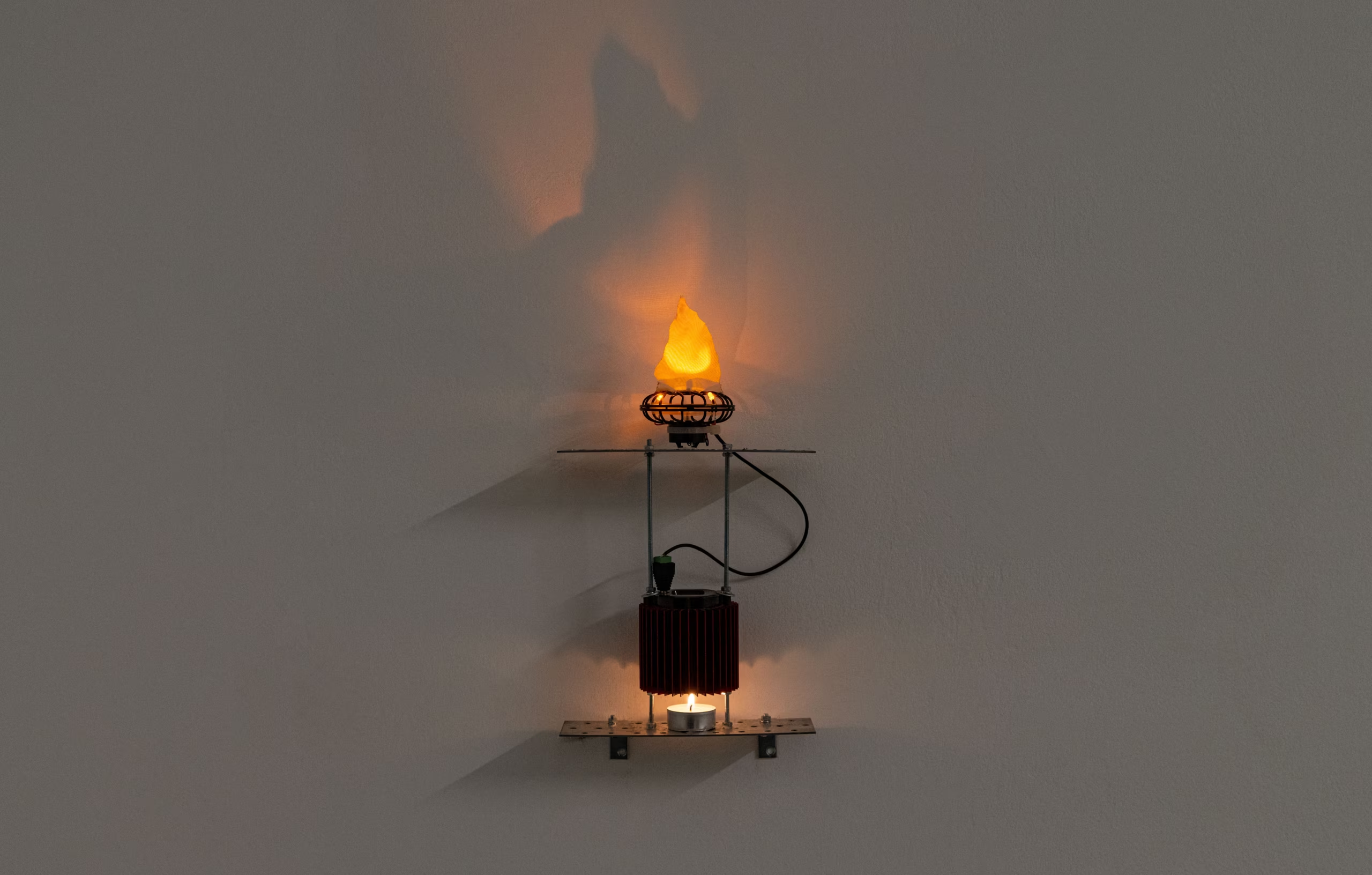
In the exhibition’s narrative, energy functions as a social product – the result of the transformation of matter through human labor. Energy shapes the collective imagination and influences culture. It is a political force and the fuel of economies. It cannot be reduced to raw materials alone – to coal, uranium, natural gas, and crude oil. The exhibition instigates a clash of ideological, economic, and ecological imperatives, shedding light on the dilemmas and contradictions that result. Its thematic scope is harnessed to the energy-intensive drive of socialist modernization, the environmental and political ramifications of Soviet and Russian energy imperialism, and energy transitions of the post-socialist era. The exhibition interrogates prevailing visions of progress, its horizon delimited by planetary ecological crisis.
A Reframing of Eastern European History
The exhibition will feature archival materials alongside works by contemporary artists from Poland, Ukraine, Hungary, Lithuania, Slovenia, Belarus, and Uzbekistan. This visual narrative weaves historical methodology into the space of Studio BWA Wrocław, a contemporary art gallery. “In our hands,” begins Jakub Gawkowski, “contemporary art becomes a tool enabling the reframing of this period of European history. It also allows us to embark upon discussions of the future. About capitalism and what comes after it.” Curator Joanna Sokołowska adds: “Art splices perspectives and phenomena that otherwise exist separately in social life. In works of art, their entanglement is made visible. Here, politics and ecology are inseparable.”
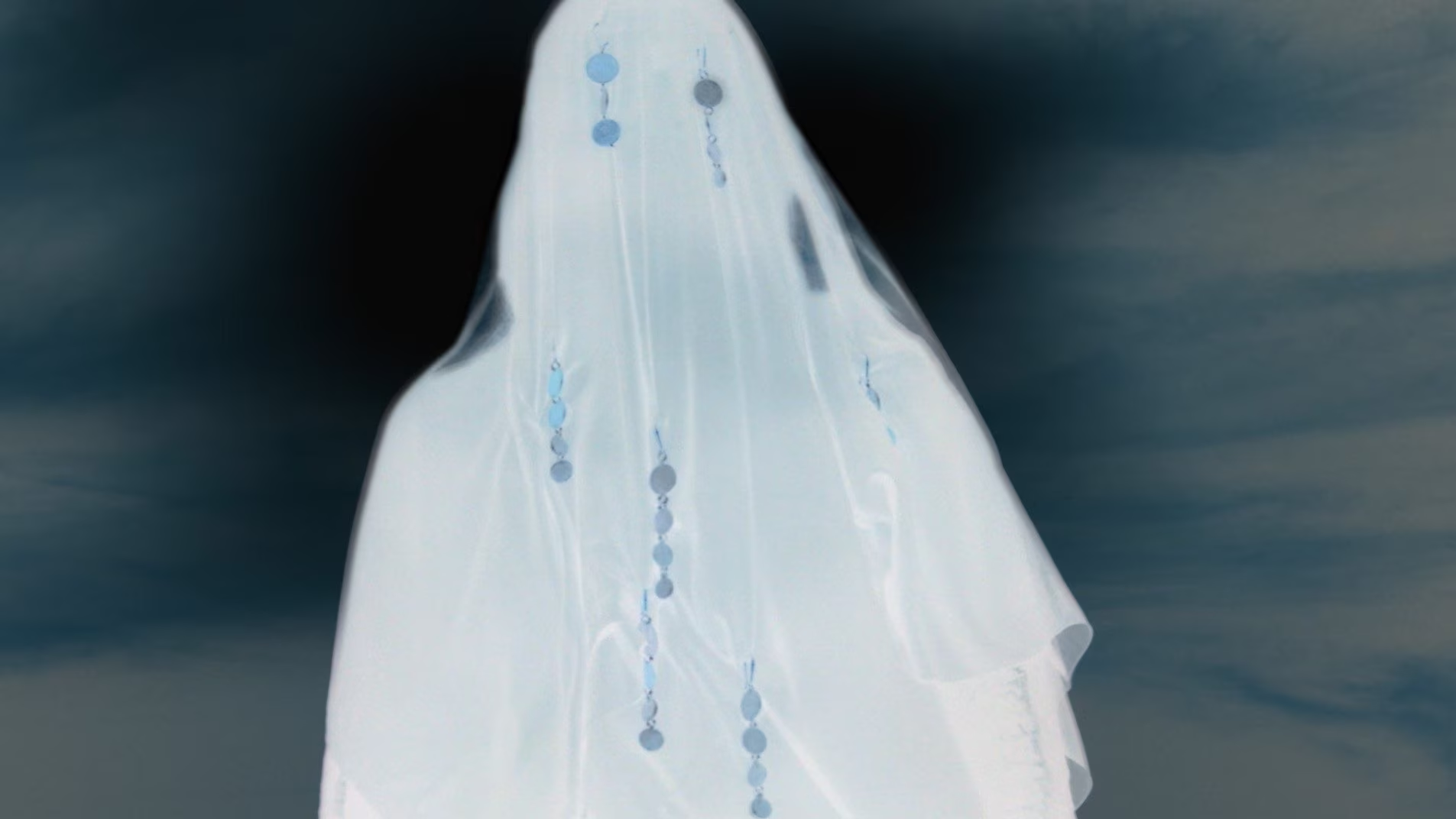
In his practice, Ukrainian artist Oleksiy Radynski confronts the legacy of energy infrastructures and the relations between the Soviet Union and Western Europe, and by repercussive inheritance, between Ukraine and present-day Russia. His examination of the gas pipelines stretching from Siberia to Western Europe becomes an entry point into current political discussions on Soviet colonialism and contemporary German–Russian relations. Lithuanian artists Nomeda and Gediminas Urbonas survey the Druzhba (Friendship) Pipeline, first connected in the 1960s, branching off ever since across four thousand kilometers from Siberia through Ukraine and Belarus to the Baltic states, Poland, and Germany. In their research practice they analyze social, ecological, and political relations, their colonial analysis encompassing workers’ emancipation, migration within the Soviet Union, and socialist internationalism. Beyond Eastern Europe, contemporary Uzbek artist Saodat Ismailova extends the exhibition’s reach into Central Asia. Her visual essay unfolds in Kazakhstan, in one of the USSR’s so-called atomic cities, where the consequences of Soviet nuclear weapons research proved catastrophic for both the local population and the natural environment.
The End of Utopia and the Force of Social Energy
Jakub Gawkowski and Joanna Sokołowska turn to archives to illuminate pivotal events in Eastern European history. The exhibition’s title itself – Tractor or Reactor – refers to the actions of the Praffdata group in 1987, which projected the voice of artists into the debate about the construction of a nuclear power plant in Poland. The exhibition will include footage by citizen filmmaker Mykhailo Nazarenko, presented publicly for the first time. Nazarenko documented life in Pripyat, the Soviet industrial town built for workers at the Chernobyl nuclear power plant, now part of Ukraine. In his films, Nazarenko created a portrait of a model socialist city, with the power plant rising not only as a technological construction but as a generator of social energy and cultural life. When the reactor exploded, Nazarenko was there to document the fallout. The history of Elektrėnai – another (post-)Soviet industrial town, built in Lithuania around a power plant – is the subject of Deimantas Narkevičius’s film. In the case of Elektrėnai, the catastrophe arrived as political transformation itself, when the plant’s closure left behind a deserted populace. The filmmaker channels the spirit of collective labor and progress as forces that build community – and then chronicles the demise of utopia. At its core, the film tackles the collective dilemma of a community searching for an idea capable of restoring common purpose.
Tractor or Reactor gathers works and documents animated by the force of social energy mobilized in pursuit of dreams of prosperity, freedom, and peace. It also maps the fault lines of global transformations. Initiating encounters with historical and contemporary visions of the future, from utopian to grassroots, the exhibition bears witness to the costs that progress extracts from populations and the environment. In the process, it asks what type of future this region – and humanity as a whole – is now capable of imagining.
The exhibition was developed on the basis of research conducted by Jakub Gawkowski and Joanna Sokołowska as part of a collaboration between the Goethe-Institut Kraków and BWA Wrocław Galleries of Contemporary Art.
Artists: Marcin Derda, Vadim Fishkin, Ludwik Holesz, Saodat Ismailova, Justyna Mędrala, Deimantas Narkevičius, Mykhailo Nazarenko, Teofil Ociepka, Praffdata, Oleksiy Radynski, Mako Sajko, Rita Süveges, Nomeda and Gediminas Urbonas, Julita Wójcik, Monika Zawadzki
Exhibition curators: Jakub Gawkowski and Joanna Sokołowska
Gallery curator: Joanna Stembalska
Visual identification: Łukasz Paluch
Production: Monika Muszyńska, Sara Szczegółą
Assembly: Daria Chraścina, Jakub Jakubowicz, Tomasz Koczoń, Daniel Mroczyński
Promotion: Agata Kalinowska, Berenika Nikodemska, Jagoda Olczyk, Żaneta Wańczyk
Accessibility coordination: Magdalena Weber
Video translation: Sofiia Baianova, Jerzy Chyb
Audience engagement: Elia Pakura
Editorial oversight: Joanna Osiewicz-Lorenzutti
English translation: strona 895 | page 895
Partner: Liszt Institute—Hungarian Institute of Culture in Warsaw
With the cooperation of: Slovenian Film Center, Educational Film Studio, Polish Television, Pripyat Film Archive, Foundation of the Gold Mine in Złoty Stok, Praffdata Culture Creators Association, Archive of the Museum of Modern Art in Warsaw, Teofil Ociepka Foundation, Remembrance and Future Center
Media patrons: TVP3 Wrocław, TVP Info, Radio RAM, Radio Wrocław, Radio Wrocław Kultura, Pismo Artystyczne Format, Szum, Notes Na 6 Tygodni, Miej Miejsce
BWA Wrocław Program Director: Katarzyna Roj
BWA Wrocław Director: Maciej Bujko
Organizer: BWA Wrocław Galleries of Contemporary Art
Deimantas Narkevičius’s participation in the exhibition was supported by the Lithuanian Culture Institute.