“Forms of Meaning.” Contemporary Polish Ceramics at the 6th UNICUM International Ceramics Triennial 2026 in Ljubljana
Ceramics is no longer just a craft – today, it increasingly becomes a field of experimentation and a way of narrating contemporary realities. In Ljubljana, as part of the 6th UNICUM Ceramics Triennial 2026, a presentation of works by a younger generation of Polish artists and designers will be on view from May 15. The exhibition “Forms of Meaning. Contemporary Polish Ceramics” will be one of the most distinctive highlights of this year’s edition.
The exhibition, organized as part of the “Beyond Use” program by Center Rog, will run from May 15 to September 5, 2026. The UNICUM International Ceramics Triennial is a prestigious exhibition held every three years by the National Museum of Slovenia in collaboration with Center Rog. It serves as a platform for creators from around the world and a space for showcasing the latest, most innovative works. The event acts as a catalyst for new trends and promotes sustainable practices, encouraging the use of environmentally friendly materials and techniques.
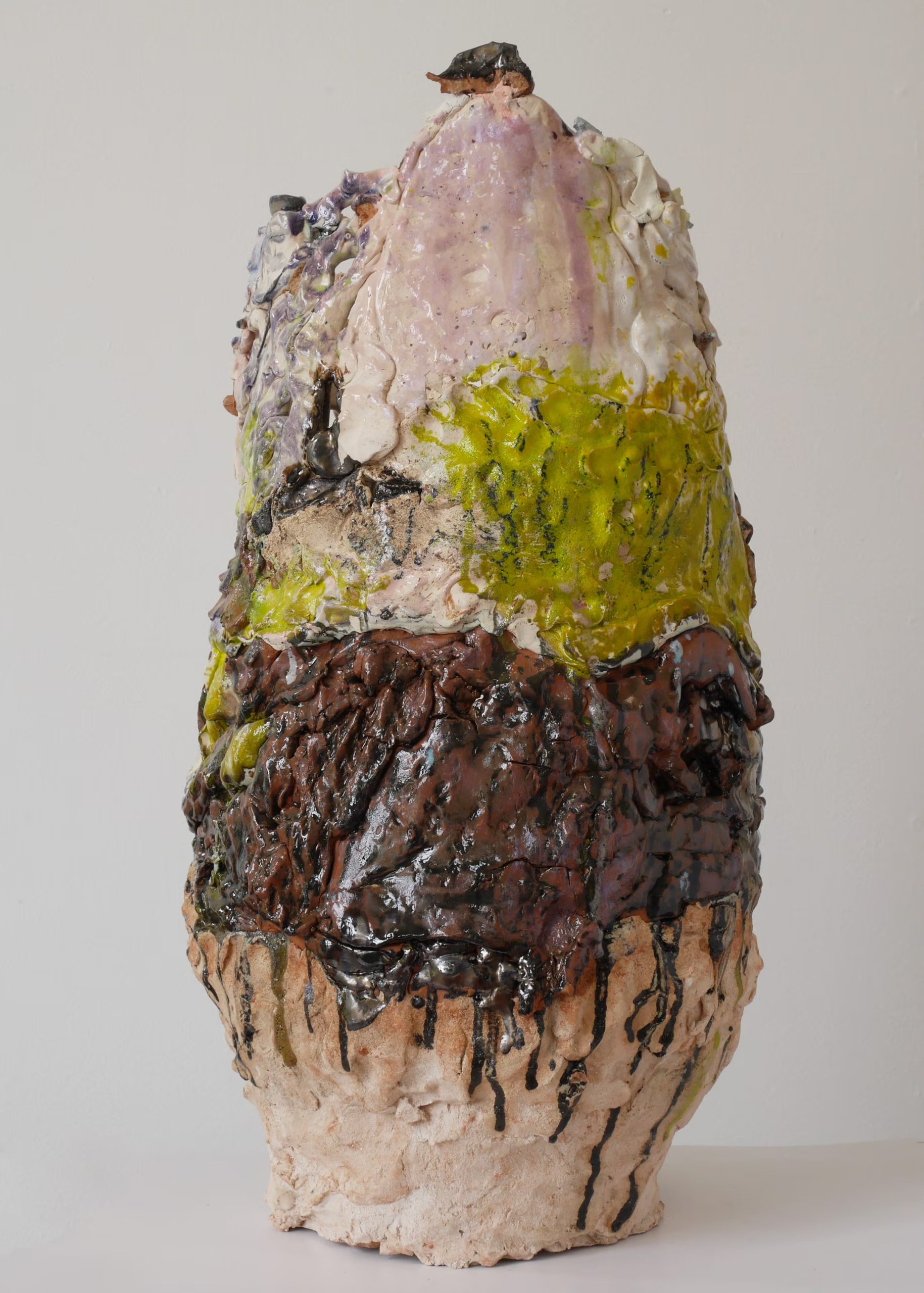
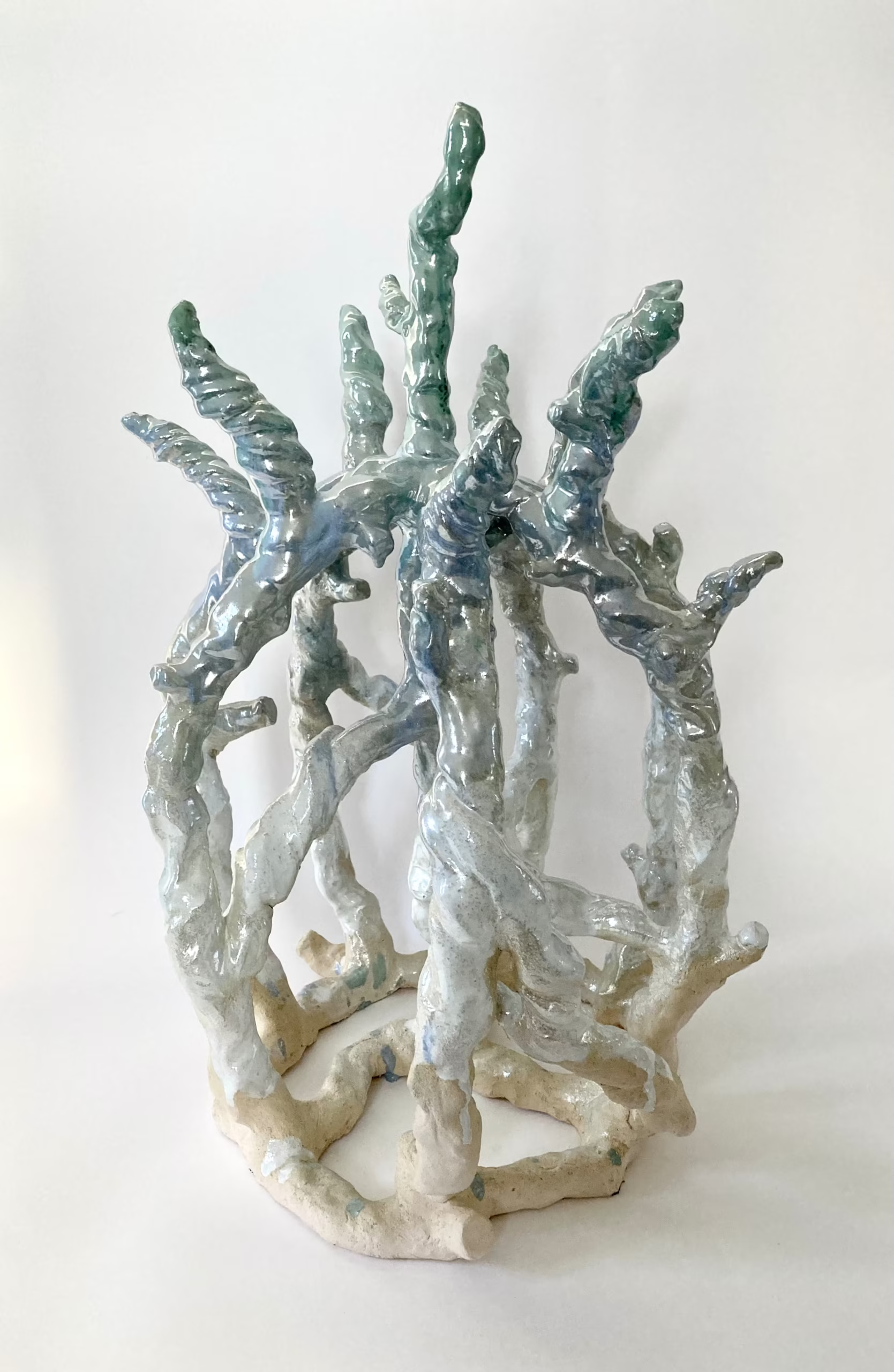
photo: Marcin Spiora
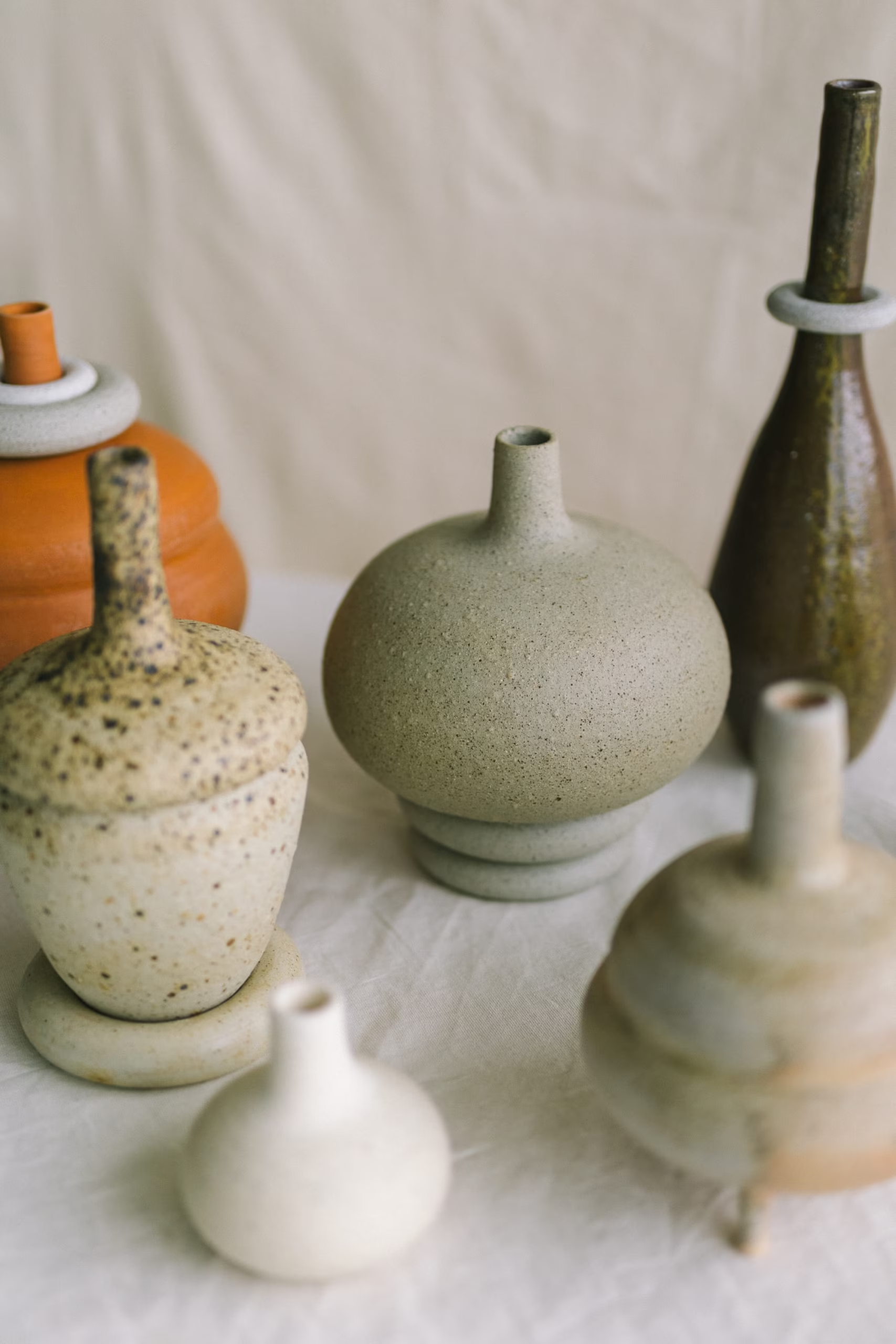
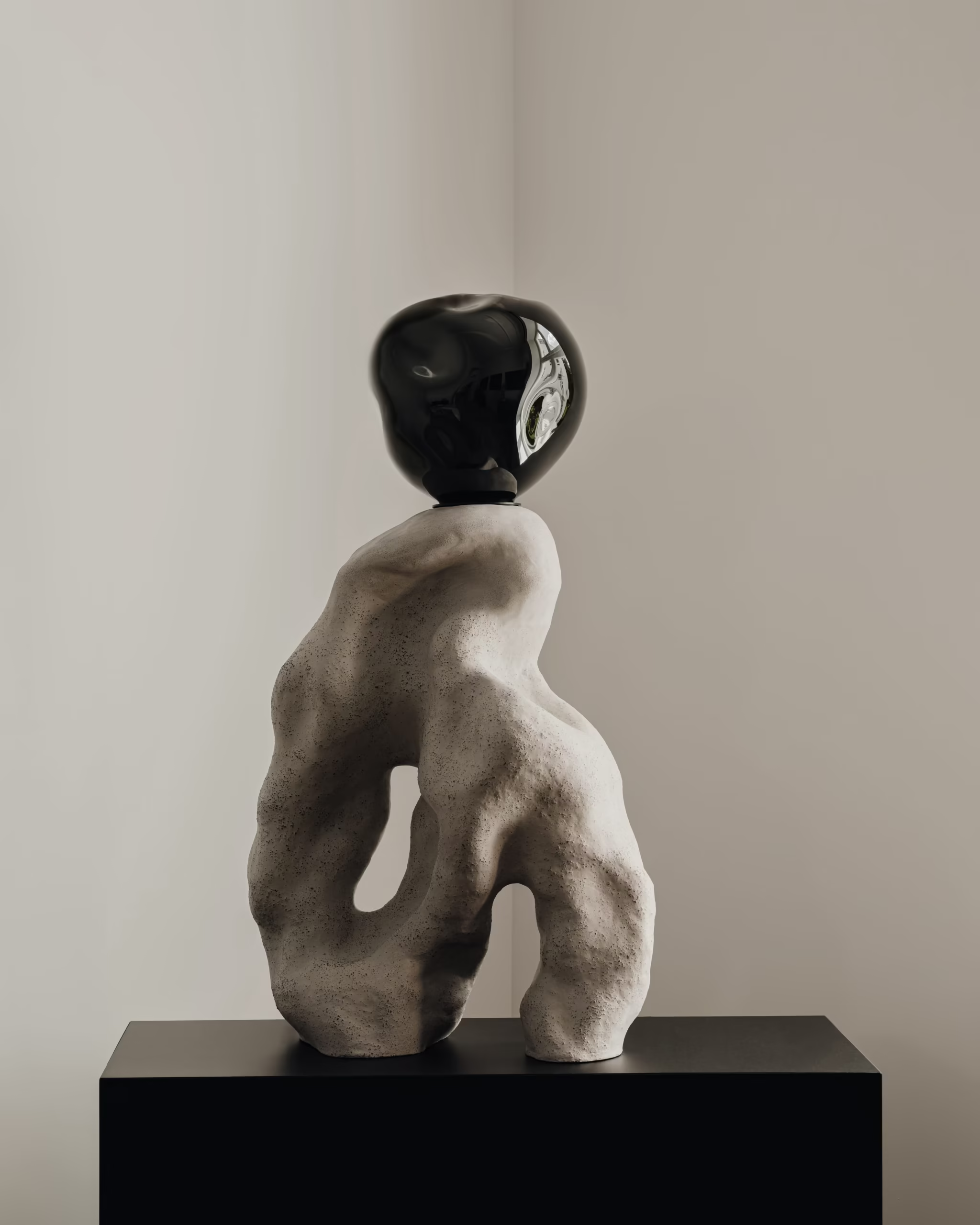
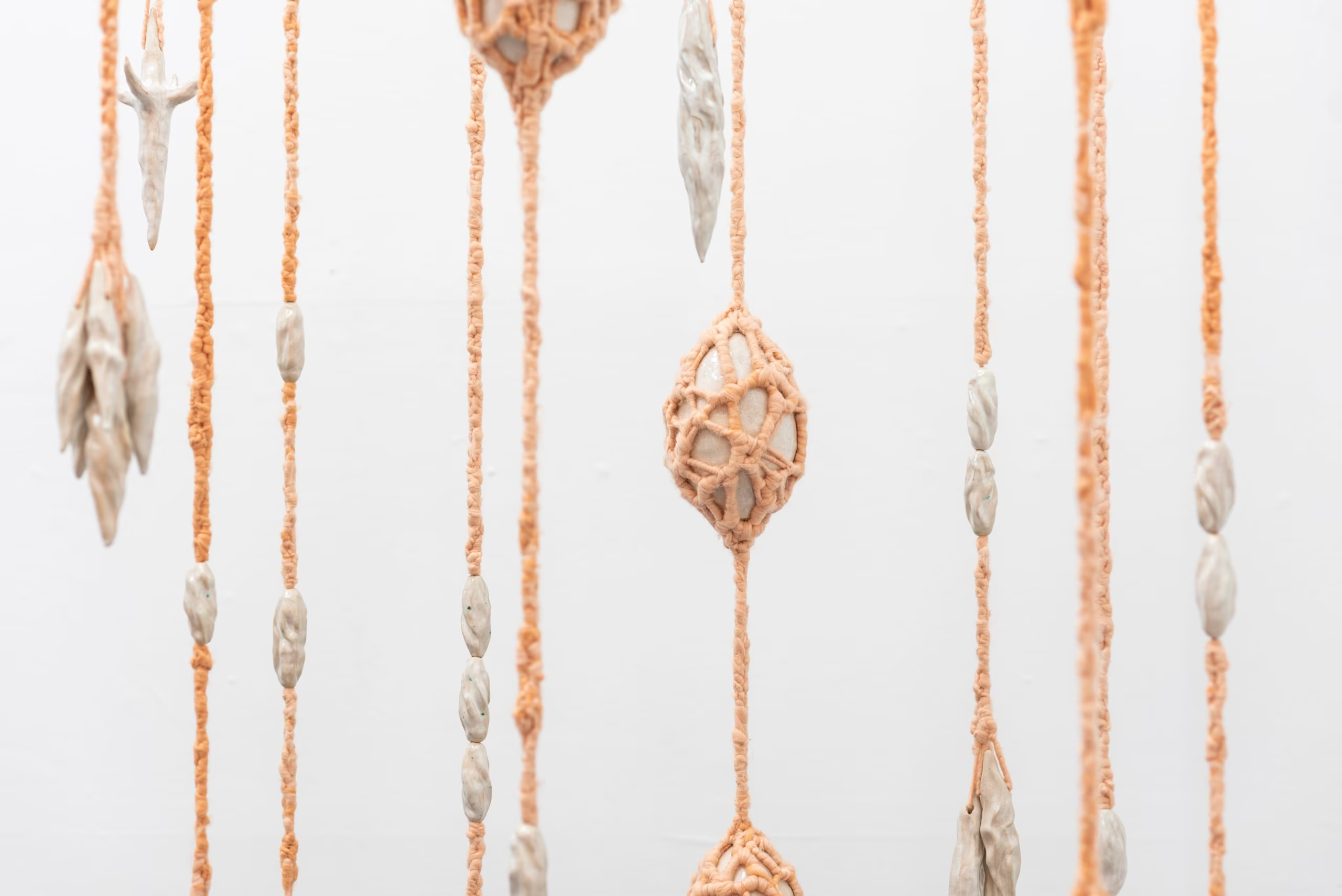
photo: Kuba Mozolewski
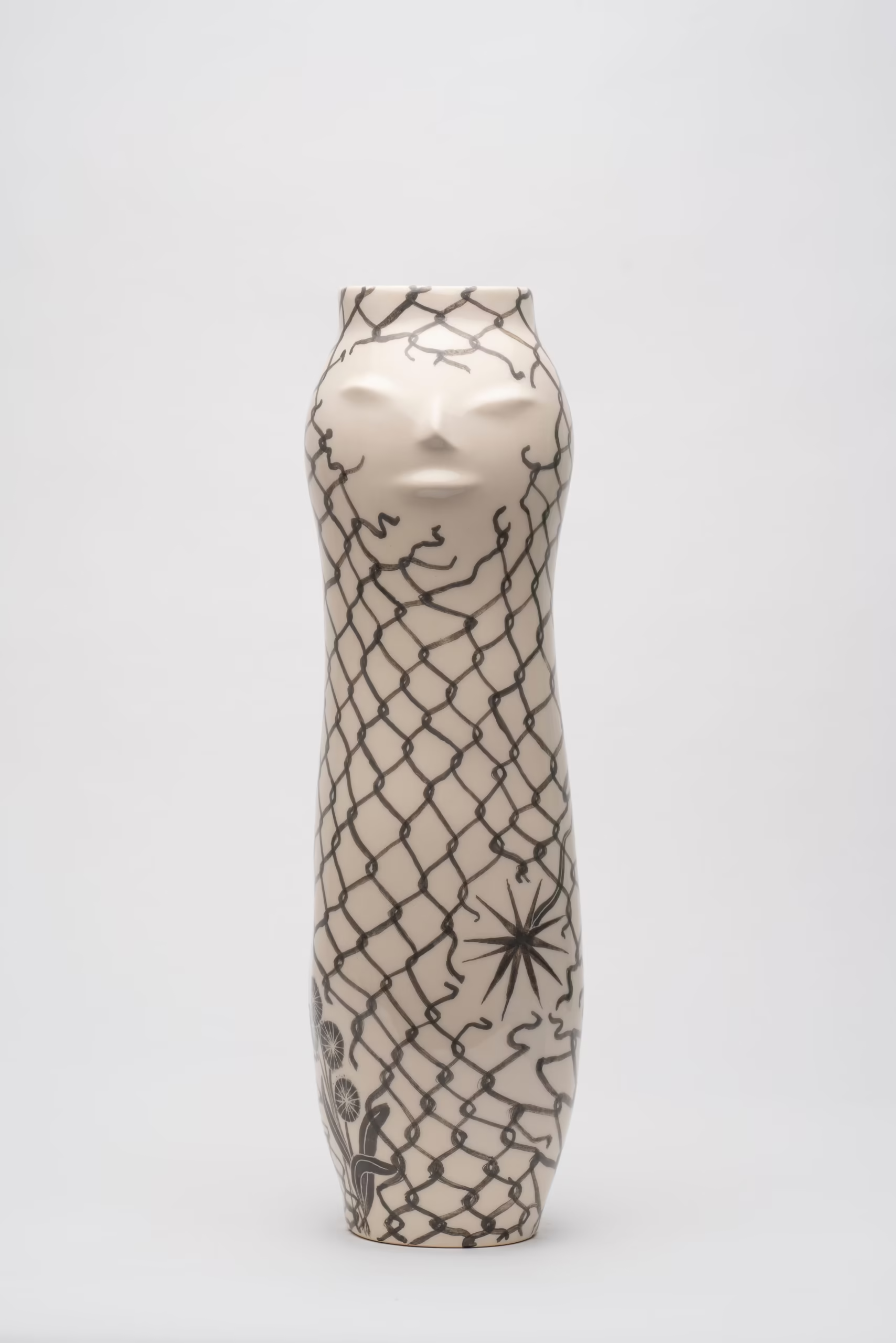
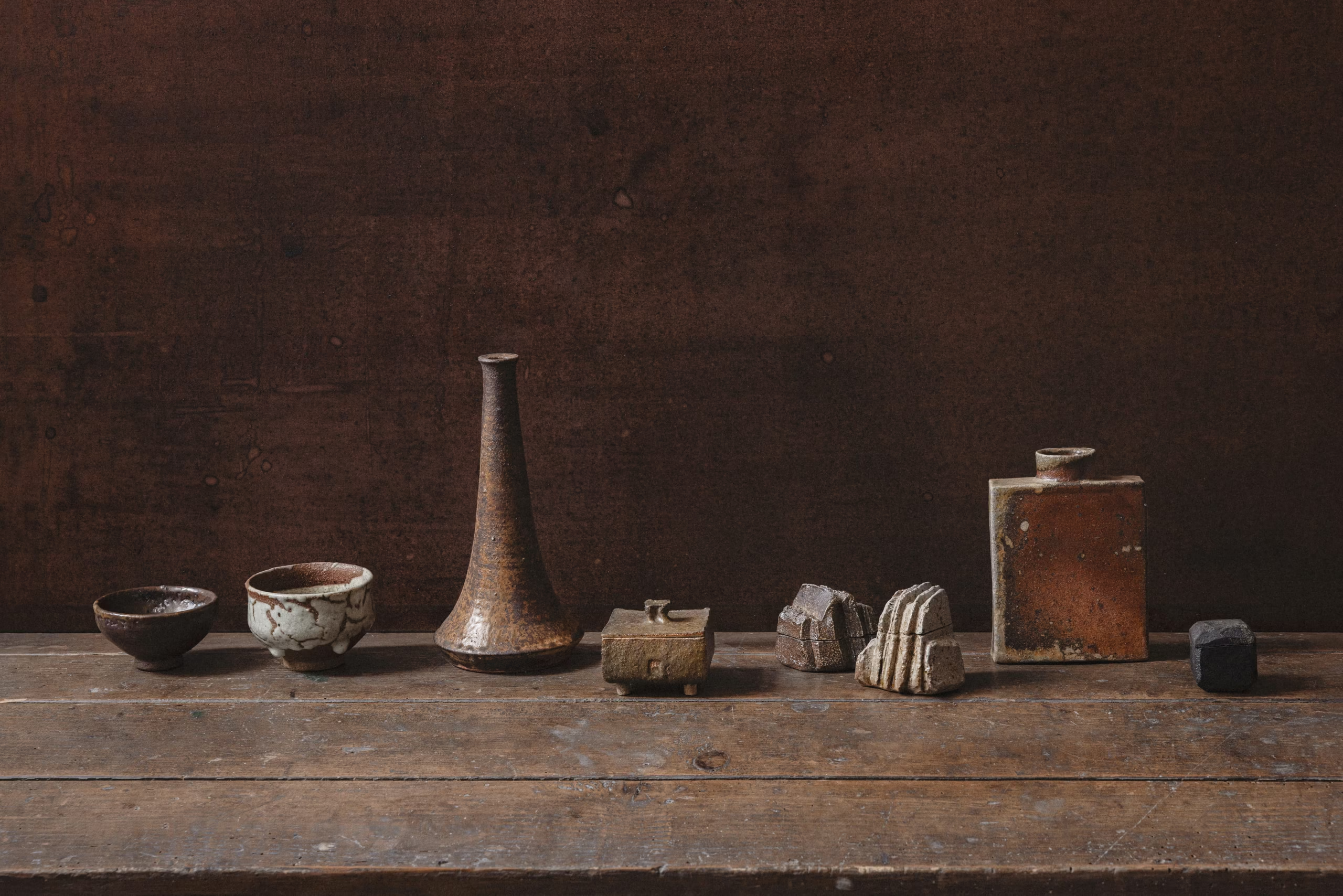
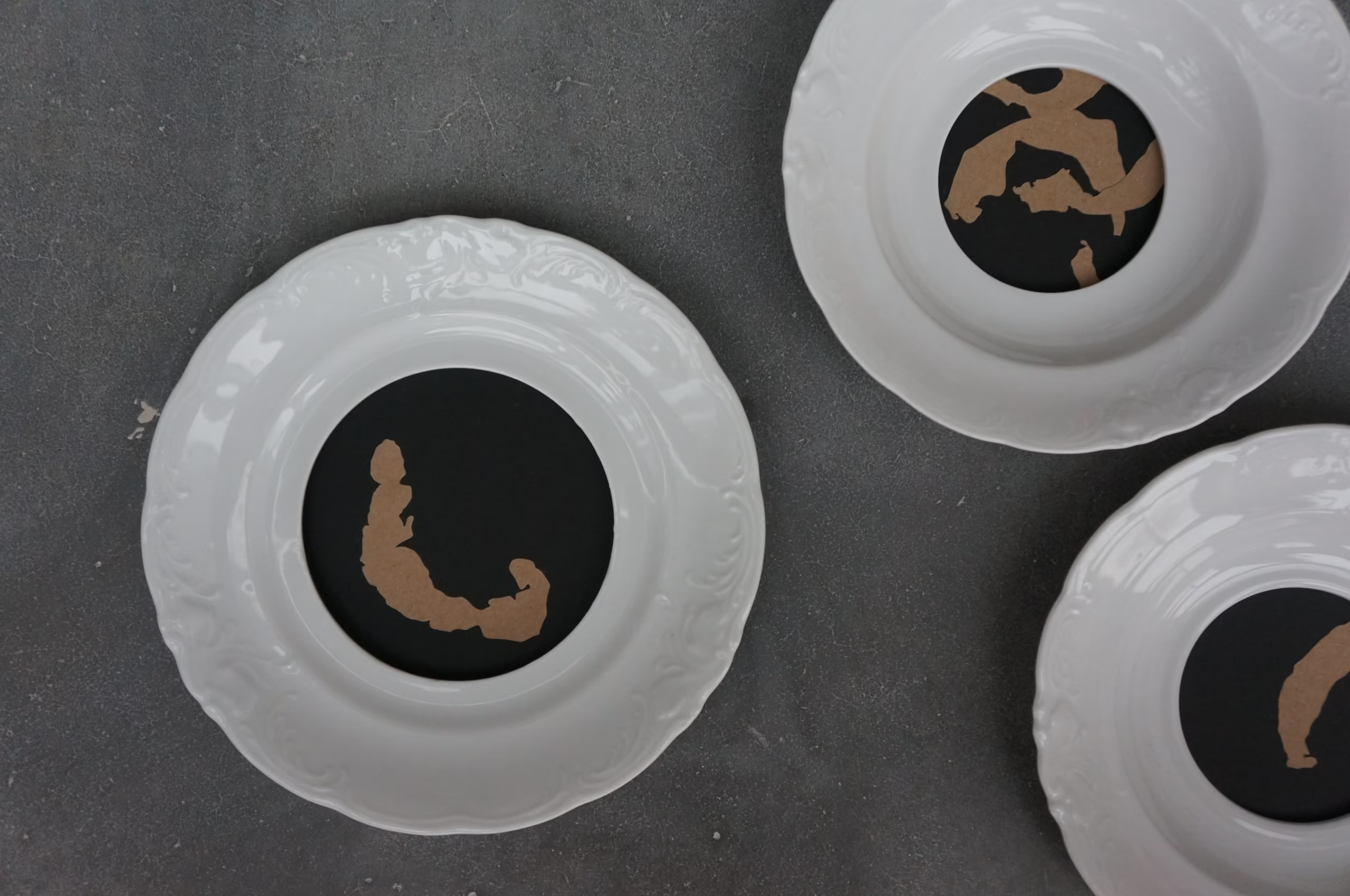
The Polish ceramics exhibition is one of the key elements of this year’s edition, while also offering a more focused, intimate narrative within the broader international program. Curator Mika Drozdowska invited thirteen artists and designers from Poland to demonstrate how clay is approached today – not only as a material, but also as a carrier of meaning, memory, relationships, and responsibility. The exhibition will feature works by Bartosz Brylewski, Aleksandra Liput, Lena Majsiak, Anja Marschal, Karina Marusińska, Natalia Kopytko, Paweł Olszczyński, Iga Staszczak, Dominika Kulczyńska, Aleksandra Pulińska, Huba Studio (Jakub Ciemachowski, Piotr Kołakowski), and Zbiór (Antonina Wolska, Iga Staszczak).
“After the strong presence of Polish design at Milan’s Salone del Mobile, we are moving to Ljubljana for the Triennial, which offers a curatorial perspective focused on material, experimentation, and reflection on the very essence of the object. This is particularly important for us, because with such a strong Polish representation, the event gains new significance in the region and allows us to tell a different story about contemporary Polish design” – emphasizes Olga Wysocka, Director of the Adam Mickiewicz Institute.
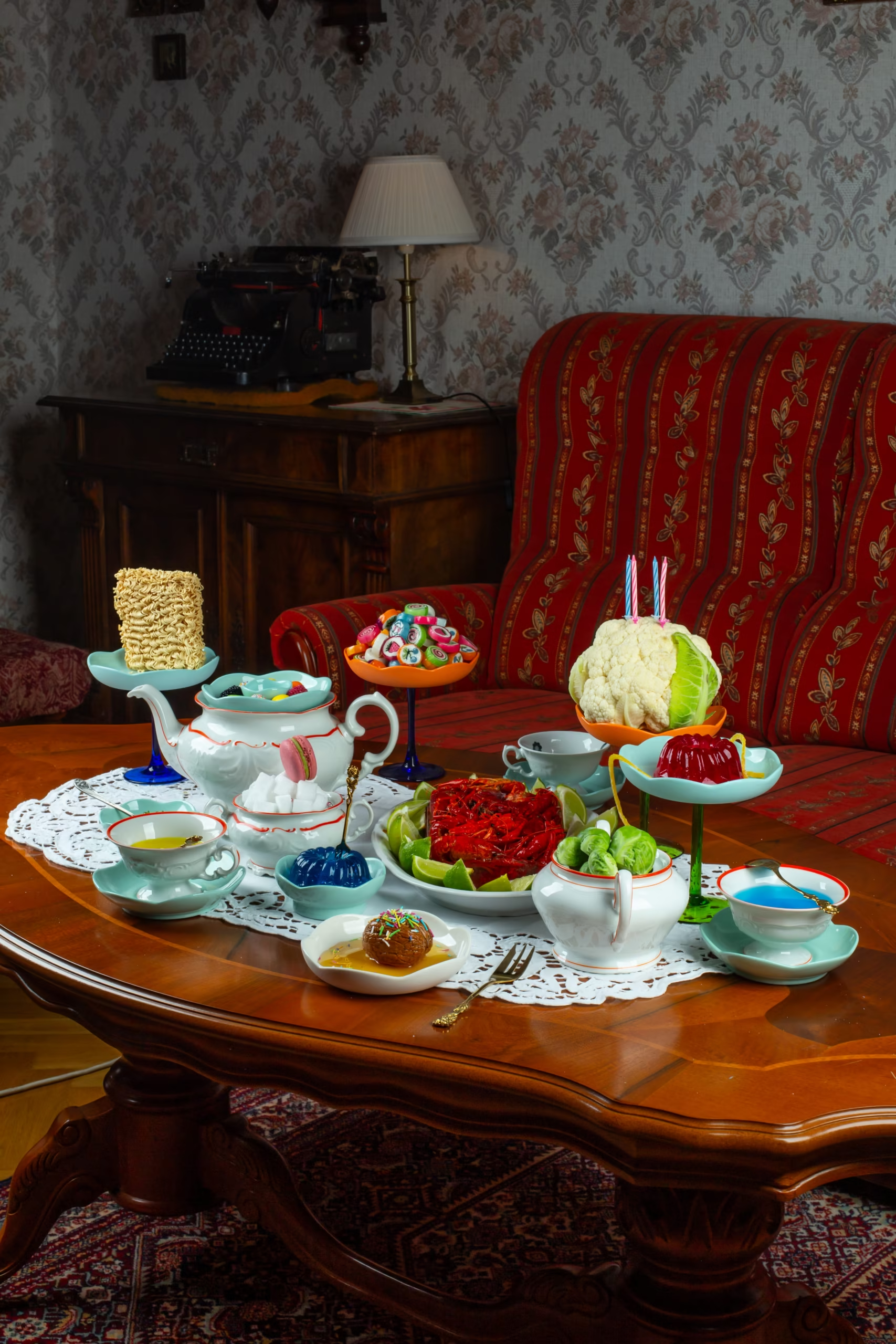
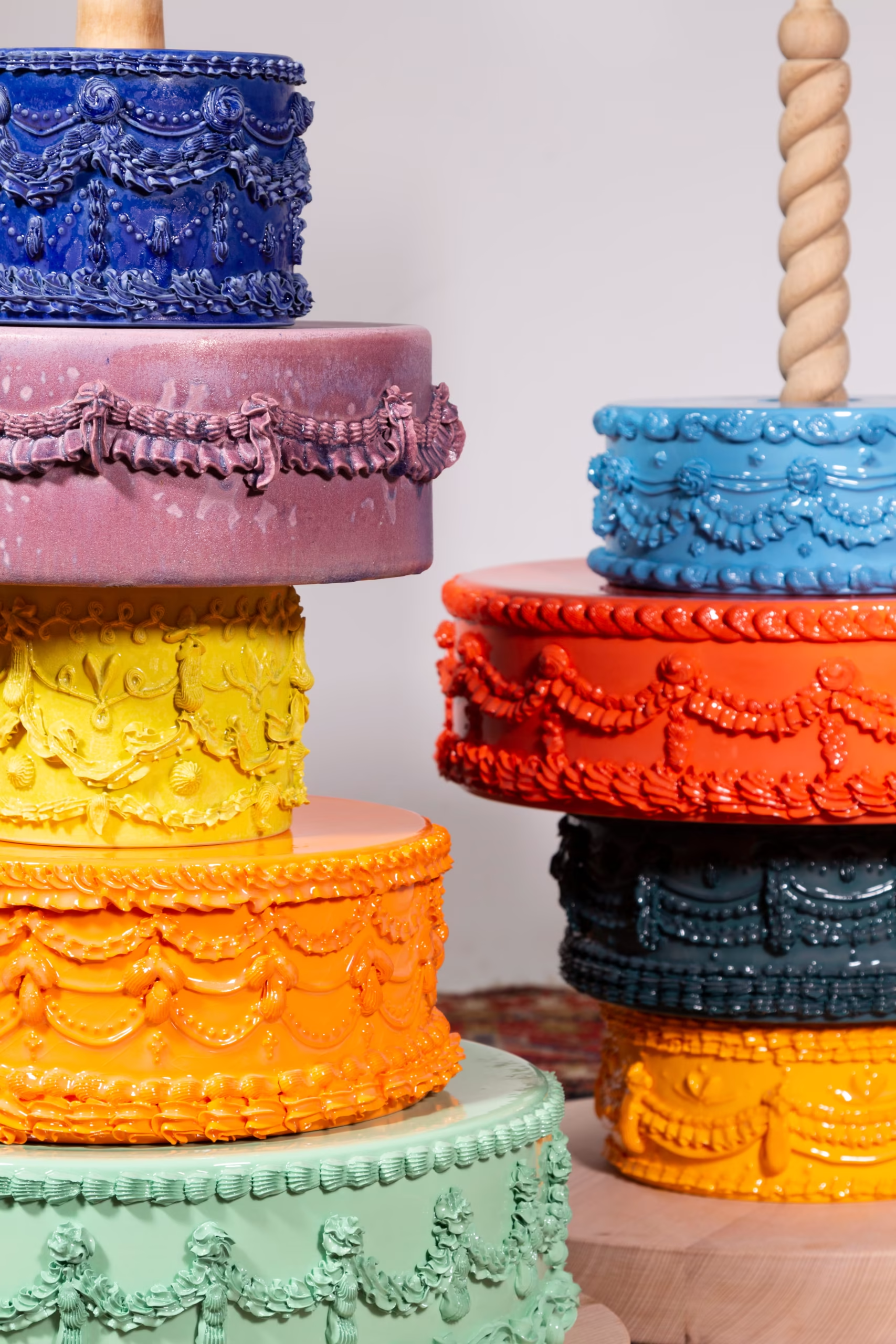
The works presented move between design and contemporary art, between function and its subversion. Everyday objects lose their obviousness – they become a starting point for questions about the body, daily life, relationships with objects, memory, the environment, and the future of design. At the heart of the exhibition lies the belief that meaning is not fixed within an object once and for all, but emerges through relationships: with material, process, user, and context.
“Ceramics has always been close to life – present in everyday gestures, rituals, and ways of use. In the Polish context, it has developed simultaneously between industry and studio practice, between mass production and unique objects. At the center of these practices is the material – clay – which is not neutral but undergoes transformation and records traces of time, labor, and energy. The works in the exhibition present different ways of thinking about function: as relationship, experience, system, or space. What connects them is a sensitivity to how objects operate in everyday life – how they are used, touched, repaired, and remembered” – says curator Mika Drozdowska.
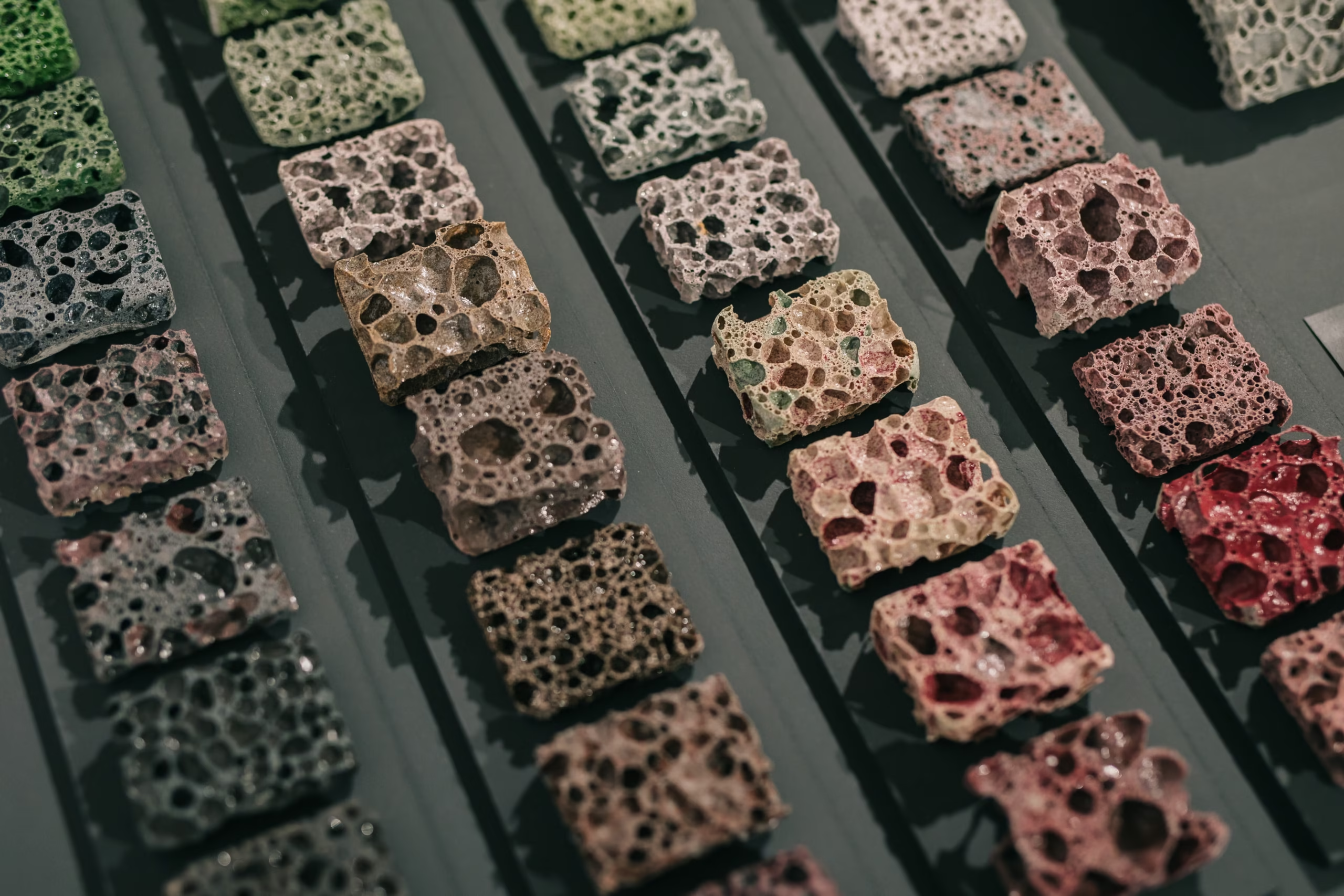
“Forms of Meaning” is part of the larger exhibition Beyond Use, curated by Anja Radović and organized by Center Rog – a new creative hub in Ljubljana that strongly emphasizes the connection between design, practice, experimentation, and technology. It is here that ceramics moves beyond the museum display case and enters the laboratory: a place where it is tested, processed, and redefined.
The Polish section fits perfectly within this context. Rather than presenting a single dominant style, the artists propose a polyphonic approach – from works based on material research, through formal and glaze experiments, to projects balancing on the boundary between sculpture and functional object. What unites them is the awareness that ceramics no longer needs to prove anything; instead, it can freely transcend its own boundaries. An ecological thread is also significant. Many of the works raise questions about material responsibility, production processes, and the future of design – not as a slogan, but as a real practice, visible in the choice of raw materials, techniques, and ways of thinking about objects.
The presence of “Forms of Meaning” in the UNICUM program is no coincidence. For years, the Triennial has built a bridge between local and international art circuits, but this year it clearly expands its scope – opening more broadly to design and functional forms. In this context, the Polish exhibition becomes more than just a “national representation.” Rather, it is an invitation to reflect on what ceramics is today – and what it might still become: a medium that is both intimate and expansive, rooted in everyday life yet open to speculation, technology, memory, and responsibility.
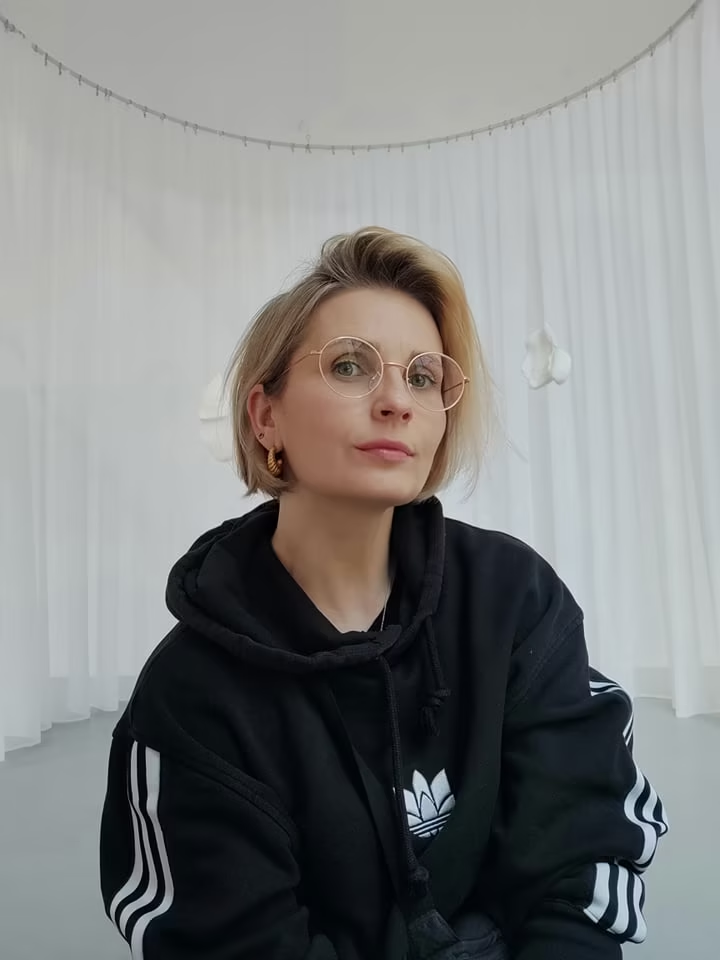
Mika Drozdowska
– a graduate of the Faculty of Ceramics and Glass at the Academy of Fine Arts in Wrocław and Anadolu University in Eskişehir (Turkey). She currently works as curator of the BWA Wrocław SIC! gallery, which she transformed from the Glass and Ceramics Gallery, introducing a new dimension based on experimentation and artistic exploration. Her work focuses on glass and ceramics as media of contemporary art, but over time she has expanded it to address issues concerning not only the material itself, but also its historical, geopolitical, social and ecological context. She is particularly fascinated by themes such as ‘transparency’, ‘fragility’ and ‘visibility’. Art in public spaces is another area that forms an integral part of her work, as exemplified by projects such as the urban game “GlassGo” and “Art on Demand” – a Mobile Gallery featuring Ben Wright’s exhibition “Invasive Species”.
She is the author of numerous contemporary art exhibitions. Between 2014 and 2019, she co-created a residency programme at the BWA Wrocław Galleries of Contemporary Art. At the invitation of the Pilchuck School of Glass in Stanwood, she organised an international group exhibition to mark the 50th anniversary of the Emerging Artists-in-Residence programme, “Autonomous Zones”. She is a board member of Gent Glass Studio in Belgium (2021–2024) and has been on the board of the Glass Art Society (GAS) since 2023. She is the recipient of the Wrocław Art Award 2024.
- Curator: Mika Drozdowska we współpracy z Anją Radović
- Artists: Bartosz Brylewski, Aleksandra Liput, Lena Majsiak, Anja Marschal, Karina Marusińska, Natalia Kopytko, Paweł Olszczyński, Iga Staszczak, Dominika Kulczyńska, Aleksandra Pulińska, Huba Studio (Jakub Ciemachowski, Piotr Kołakowski), Zbiór (Antonina Wolska, Iga Staszczak)
- Organisers: Center Rog, Instytut Adama Mickiewicza
- Partners: Ambasada Rzeczypospolitej Polskiej w Lublanie, BWA Wrocław Galerie Sztuki Współczesnej